Ghosts in the New Testament? Looking for Phantoms in the Gospel of Mark

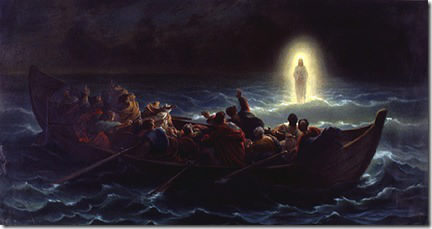
christ_walking_on_the_water

INTRO

With a name like ParanormalChrist, perhaps some biblical discussion on the Paranormal is in order, if nothing but to quell and satiate our fetish for paranormal activity.

As has been argued in other posts, Christianity is a paranormal faith. It’s a faith that not only embodies paranormal elements in the general sense of that word, but also narrates a salvific reality alongside the normal that is seeking to redefine and re-narrate creation into something other. Christianity is not a history of stories about historical events that were “normal” for biblical times and are not “normal” now; Christianity is a counter-witness to the norm of supposed creation and is the arrival of a rethinking of the normal “alongside/Para” the normal.

Christianity emanates the paranormal: God incarnate in a human being, paranormal activity in the heavens at his birth, paranormal healings and miracles, the paranormal taming of natural elements…and my favorite paranormal constitution-The Resurrection of Jesus from the very dead! And let’s not forget the opening of Tombs in Matthew coalescing around that said apocalyptic manifestation of the paranormal arrival of the end of time at the very dissolution of the grave of Jesus. So, if you are looking for paranormal, just open the New Testament and read. See my previous post, “I see Dead People: Zombie Apocalypse or Resurrection of Jesus” for a fuller explication.

A HISTORY OF PHANTOM IN THE GREEK LANGUAGE

I will keep this discussion on the actual New Testament word that is used for “ghost” or “apparition,” focus on its meaning, its etymology, the texts in which it occurs, and perhaps give a few deductions from its contextual usage.

The specific language of “phantom” is part of an extensive etymological family that starts with the Greek word fain0, meaning in the transitive sense “to manifest or show” and in the intransitive sense “to shine or gleam”…the point being an emanation of sorts. Interestingly, in the NT the word faino only occurs in the intransitive sense of “to shine” and such can be found in multiple places such as John’s Gospel, Revelation and parts of the Pauline corpus.

The NT makes extensive use of the derivatives of faino via the terms faneros/fanerow. Similarly these derivatives mean “to make visible to perception,” “ to show” in the sense of both disclosing to the mind and the eyes. The reference is not just to a simple “revealing” but to a revealing that also involves some sort of understanding. A disclosure of the gospel and its meaning is usually the direct object of this language.

Like many of our English words, our word “phantom” comes directly from its Greek descendent “phantasmos…fantasma.” This is the nominal form of the verb fantazo and it means “to bring to manifestation” and it is often used in the Greek to denote an appearance. We have evidence of this sort of usage not only from the New Testament, but specifically from classical Greek authors such as Herodotus and Apollonius.

The word, however, is not limited to the manifestation of what appears to be a unique kind of physicality. In the Old Testament Apocryphal books, such as Wisdom and Sirach, we see a spiritualizing of the term, so that in Wisdom it refers to the appearance of Wisdom to those that are following the path of righteousness…while in Sirach (and perhaps to the dismay of some reading this blog) this very language means to “invent, imagine” and is almost synonymous with the verb “fantasiokopew,” which means to “see phantoms.” The implication being that this language of phantom has been consistent in ancient times, as today, with those that fabricate reality; that see things that aren’t really there.

fantasma (our English phantom) is a member of these family of meanings. One might ask how this might be so? How can these words that mean some sort of appearance and revealing have anything to do with what we today think of as modern day apparitions, or for that matter, ancient apparitions?

First, as a derivative, their connection seems pretty clear that even if one is talking about making something appear, whether it be related to the paranormal or not, the idea of appearing is still there. This is also usually followed by some form of light or shining.

But a second level is equally important.

If this language is used as a means of disclosing a truth, or bringing something to light, the places where this language occurs in the Gospel can take on a double meaning. It can mean to denote the typical vernacular of “ghost” but also can mean an appearing in the form of revelation that leads to understanding, particularly because this language is only used to describe a scene in which Jesus coming to his disciples.

Let’s look at that passage(s).

MARK 6.49 & MATTHEW 14.26

The ONLY place in primitive Christian literature where the word “phantom/fantasma” occurs is in The Gospel of Mark 6.49 and its parallel passage The Gospel of Matthew 14.26.

These verses read, “Beholding him [Jesus] walking upon the sea they thought he was a phantom and they screamed” [my translation].

Our Bibles like to domesticate this scene and many translations just have at the end “they cried out” but if what they are witnessing is a perceived ancient paranormal encounter with sea ghosts as were believed to exist, screaming would be the order of the day…not a wimpy crying out for help.

Matthew reads the same way, without any deviation in form, so the parts of speech operative here are also identical. We should not interpret this as two different occurrences, but the remainder of a singular tradition that found its way into Mark and then incorporated by Matthew. There is nothing in the Greek to convince us otherwise.

The idea being expressed here is that the disciples are in a boat on the sea. Their lives are already riding upon the hands of chaos and they are at the whim of nature and the forces of darkness that lurk beneath and above them. They find themselves caught in a storm, and if we read this text rightly from its etymological level, perhaps a light of some kind is shining in the darkness of the scene. The disciples are not sure what it is but they know it’s not normal for things to be coming toward them across the water. The implication is that a ghost, a phantom, a sea ghost, is coming to them to finish what the storm has begun to do. This is a scene of panic and it touches the very core of ancient sensibilities regarding evil and the forces of nature. Their reaction is one of fear for their lives…they are tossed about on the sea and now they are about to encounter something they have only heard in the stories of others.

Into this scene, Jesus is the one that is really “revealed” in the light of this perceived phantom. Only he’s not revealed, or appeared, or shown to be a phantom, he is shown to be one that is so much more…one that is so much more paranormal I might add. Christ is the one that comes into this unstable situation filled with fear, anxiety and screaming disciples and does what no one else can do. He calms their surroundings, he tames nature, he does what sea ghosts can’t even do and he calms the disciples.

But the disciples’ exaggeration and mistaking Jesus for a ghost should not surprise us. This reaction simply follows the Markan motif of disciples that fail to understand what is really happening. This narrative, while it is unique in the language that it uses, is incorporated into the Gospel as an appropriate narrative archetype we see over and over in Mark…and the whole point is for the audience to see more clearly what the disciples were barely seeing at all. Thus, in this story of Jesus walking on water and disciples thinking him to a be a ghost, the gospel writer is using this ancient Greek language of fainw/fantasma to really shine and illumine the person of Jesus into a situation in which his arrival is continually misunderstood.

Other than these passages in Mark and Matthew, which are most likely originally Markan following the Synoptic theory of Markan dependence, Jesus is nowhere referred to as a ghost or a phantom in the New Testament, including the post-resurrection accounts. The New Testament is very careful to not use this language of the risen Christ and we should also be very wary of a similar designation even if this is the only way we know to make sense of the constitution of the body of a risen Jesus. The narratives of his post-resurrection appearances don’t even insinuate that the disciples saw him and thought him to be a ghost…even in the John 20 narrative when Jesus appears in the room with closed doors the text says that the disciples were “surprised,” not “surprised” that Jesus had taken on the form of a phantom or ghost. They were surprised that Jesus, whom they recognized and did not confuse as a ghost, was suddenly in their midst after once hanging on a cross.

WAS JESUS A GHOST? HOW TO NOT THINK DEATH

The language that the NT uses for the post-resurrection body of Jesus is just that: Jesus. There is not a lot of qualification as to the substance of his body or its components. It really seems to be a non-issue because of the firmly held belief in the bodily resurrection of Jesus. There was no need to describe him as other than himself, as other than Jesus. So no attempt is made to call him a spirit, a ghost, or an “angel” or messenger from the grave.

Likewise, we should not take this occurrence of this language in Matthew and Mark as occasion to interpret this along with Pauline concepts of spirit/pneuma

Unlike the popular theorizing of death today that confuses the words spirit/ghost/phantom/apparition, etc., the NT never confuses these terms. The Spirit that is talked about in Paul is not anywhere near the ancient meanings of phantom we see in the Gospels or other classical Greek literature. Spirit refers commonly to the spirit of God, or God’s presence. It also refers to the enlivening portion of a person…their inner workings, but it never refers to an alternative form of existence that floats around disembodied. That idea comes from the Greek notion of soul/psueche and even here we do not see the NT going out of its way to contrive a weird theology of after- life existence combining ideas of phantom, spirit and soul as we are so apt to do in our modern period.

When the NT wants to speak of life after death it always does so in the context of anastasis/resurrection. If we want to understand what it means to live after we breathe our last we need to start with this concept and begin to purge ourselves of heterogeneous mixture of all these ideas that link things like phantom and spirit. The NT doesn’t do this…so if we claim to be biblical, or even logical, this is a first step in the right direction.

LESSONS LEARNED AND CONCLUDING OBSERVATIONS

Finally, some have asked me if we can deduce from the usage of phantom language in this Markan account that phantoms/ghosts exist.

First, what we can say for certain is that in this passage of Mark the author is clearing playing with this language and the disciples are once again going to be stooges in the narrative. The author IS using language that would have had play in his context. It was intelligible and would have been widely understood. The sea was the abode of all sorts of mystery and it was not uncommon to hear of stories of ghosts on the waters. Before we can make a deduction about whether this proves ghosts to exist, let’s first understand why this passage occurs and its role in Mark.

Second, up until fairly recent history…and even into the present for many, it was a no-brainer that ghost and apparitions existed. That this language occurs in the NT is most likely not proof that these things are real, as much as it is proof that in this culture they were thought to be real. To reinforce this, one should only note that the NT does not make a big deal of ghosts or phantoms. There is not specific statement or series of stories regarding them…so if you are looking for a biblical reason to believe in ghosts, this one narrative is gonna leave you searching for more, even though culturally we can say that such ideas were common currency.

Lastly, dead persons are never called phantoms. When the Bible speaks of those dead in the faith, they are never referred to as angels, demons, apparitions, ghosts, phantoms or spirits. The popular conceptions we have of all these phenomena are all generated from hope and experience, but they are not generated from the NT.

The most salient NT passages that speak of the dead are in Paul. His passage in Corinthians states that “those absent in the Body will be present in the Lord” (2 Corinthians 5.6-8)…or again he states in 1 Thessalonians “those who are alive and remain will not prevent those that are asleep from seeing the coming of the Lord…the dead shall rise first.” In both these passages our state of existence is ambiguous. We can either admit this, or we can continue to make sense out of it by pressing these verses into OUR PRECONCIEVED ideas not grounded in the text.

Biblically, all we can say is that when we die God is responsible for our bodies thereafter…and a biblical theology of death has no place for an idea of people that turn into all sorts of metaphysical existences.

What one must conclude after evaluating this language of phantom/fantasma in the NT is that if we remove it from its literary context we are prone to all sorts of misrepresentations and conclusions, but at place in Mark…that the disciples would think Jesus a ghost, or an invention of their mind, is not all that surprising. After all, this is the Gospel where Jesus asks us, “Do you still not understand?” ( Mark 8.21)

Jesus and the Occupy Movement: Why the Political Left (& Right) needs the Church

jesus-occupy-wall-street

As the single largest conference of the leftist and liberal political agendas gathered this Week at Pace University in NYC, I found myself wandering back through my own experience of this Conference and wanting to offer some ruminations not only on its seminal importance, but also its shortcomings as a movement.

When I went to LeftForum last year, it was galvanized by a huge presence of activists and leftists of a hundred different stripes…even a Ron Paul Leftist group was present. They were all there, descending upon the City and the University that is within a few blocks of the sights of Protest in the fall of 2011, gathering to discuss the future of our economy, our politics, our government, our social constitution…and attempting to think alternatives to the greedy hubris and totalitarian politics that is making an indelible imprint on each of our lives. It was an act of the word Glen Beck hates the most, Social Justice, a movement attempting to define and grapple with what it means to live just lives, fair lives…lives that are not stacked against the proverbial “house” that seems to be holding all the cards.

Those that attended the conference were admittedly having discussions on how to, in the words of Barack Obama, “fundamentally change” America. They were talking about folks like Marx, Trostsky, Lenin, etc. They were attacking neo-liberal political agendas and asking how we might move past these hegemonic forms of life. It was a critique of culture and it was admittedly coming from the Left.

Unlike outlets like FoxNews would have us believe, these people were not covert in their demonstrations. They were not trying to subvert the Constitution in a shrouded room with dimly lit lights and coverings over the windows. On the contrary, most of the people I talked to admitted the problems with our democracy. They went after “archaic” documents such as the Constitution, and most humbly and admirably, many of them were able to demonstrate how leftist politics and “socialism-lite” have always been a part of America’s history. Socialism and Marxism literally goes back to Thomas Paine (the darling Common Sense author of the political Right) and Abraham Lincoln (who was reading and being influenced by Marx in the 1850’s…Marx even supported Lincolns invasion of the South), both personages who conservatives worship as if American Gods and to Lincoln we have affirmed this divinity erecting a temple in Washington to commemorate his divinity. Time would fail to recount the rise of lobbyism under Grant, the creation of social “safety” nets under FDR, and the “great society” given to us by LBJ.

The attendees of the Conference know the system (and our financial and political ways of beings are systems) is so complex and multi-faceted that there are truly no simply solutions. But just because the task seems formidable and perhaps irresolvable within a complacent electorate, doesn’t mean we should just surrender the cause of justice and mute the prophetic voices that must call systematic evil to the floor. America is a difficult project because the liberal democratic ideals upon which it was founded has now been merged with ideological sentiment that is logically inconsistent with the libertinism of authentic liberalism and the net result is literally crippling the country…and there are many folks feeling the buckling of our national knees. The system simply cannot sustain itself at its current pace…we must seek alternatives…or we must be willing to accept the logical ends of capitalism unchecked and production unabated.

That their cause is noble and good is not a question. Whether or not one finds the caricature of my experience palpable or not, is also a mute point. At bottom, Occupy was about speaking truth to power, saying “hell no” to those that want to trample and prey on unsuspecting consumers…even if their ignorance is partially their fault, and it was seeking alternatives outside the framework of laissez faire capitalism (even though this type of Capitalism has been dead in this country for at least 100 years).

One of those new frameworks being explored was Christian theological tradition. This is what our group of folks was there to explore… I was part of a panel that was largely comprised of McAfee School of Theology @ Mercer University affiliated pastors and theologians that presented on the topic of global capitalism and Christianity. Our panel was chaired by the Rev. Dr. Graham Walker. We baptists were engaging the far left political and activist elements alive and well in America and around the globe.

As a group we learned several things that are extremely important for Occupy and our Churches to note.

We were asking the question, “Is there anything that the Christ event, scripture and Christian history can say to this current predicament?” And, surprise, surprise, we were the ONLY ones exploring this issue. Last year, out of 400 panels, we were the ONLY panel exploring Christian theology and economics as it interfaced the global economic meltdown.

This, however, is problematic…it is a problem because most human beings are religious in nature, in habits, in orientation, even those that claim irreligiosity or atheism. People organize their lives around principles and ideas that transcend the immediacy of their bodies, even if that which transcends our bodies is a transcendent idea of the self regulated self (which is a problem if no one’s ever told you). There is an “other” idea, concept, thing, being, whatever, that drives us toward further existence…a purpose that grounds who we are and what we value…and this value of all values is what concerns us. It is how we make sense of the meaning of life.

Most people are religious because the religious does not confine itself to a specific ontology; it is, rather, couched in various ideologies which may, or may not, be theological in orientation…Even 60 years ago Paul Tillich was making this argument…and today Slavoj Zizek is the cultural reminder of the religious value of our ideologies.

But this begs the question…if Occupy was a movement that was engaging that which is most complex in the world…and that which is felt by us all…how could it proclaim to answer these questions for the majority when most of the majority answers the tough questions of life through a lens of faith?

How can a movement tackle systemic evil when it has no paradigm for engaging evil other than in subjective moral leanings or ideological preferences from the Left…especially those that robustly discount how most people in the world determine value and a sense of good or evil?

Over and over we heard, and many saw on the news, signs that were proclaiming “We are the 99%”…as if to suggest that those in Occupy were the “common joe” and fighting for “main street” when all the while the folks that instigated the movement, and the folks that hosted LeftForum, are really part of the 1%. They are part of the academic world that has all but forgotten the word “God” or faith. Marx has become their Christ…the dead Lenin their Pope. Revolution has become their New Jerusalem and the Parousia is the place where their ideologies take a physically manifest form in the much anticipated, and not too distant, future.

“We are the 99%.” Or so we are told by all the academic elites and activists that litter the hallways and conferences of the Occupy Movement and LeftForum.

But this is not the 99%…and to try to solve the problems of the majority with an ideology of the very very marginally populated academic elite will not gain the necessary grass roots to effect real change in real systemic ways. The leaders of the movement and its intelligentsia are generally agnostic, if not adamantly atheistic. At last Springs Left Forum, one panelist even described herself forthrightly not as an activist or socialist, but as an atheist. This is the way she wants people to primarily identify her…her first impression if you will. And the movement claims no religious motivation??? Indeed, the 99% that Occupy is fighting for is most certainly atheist, right?

To neglect the religious when dealing with some of cultures most difficult problems is to neglect the singular most significant resource that humanity has used to make sense of the world.

The problem with Occupy is not its concerns or even its methods. The movement is thoroughly a justice movement, and despite the bad media attention, it is prophetic in its content.

The problem with many folks in the Occupy movement, however, is that most of them embrace historical perspectives that are antagonistic toward religion and they continue to foster such antagonism. Many of the leaders in the movement are pro-Marxist, pro-Leninist, pro-Anarchist, pro-socialist, pro-Communist, to name just a short few, and they embrace many of the great ideological thinkers behind these movements. Unfortunately, many of the ideologues that generated these many “isms” were not careful enough thinkers and they dismissed religion as myth rather than metanarrative.

What the Occupy Movement (and what this year’s Conference will also most likely miss) fails to see is that they can never effect change in a multi-contextual way if they are adamantly opposed to the theological persuasions of the 99%.

Most people in America believe in God. Most of the working class finds their faith very important to them.

Most of America, the large portions of Americans that are victims to the financially systemic evil we find all around us, believes that God is important and that their lives have divine purpose. They are not buying the famous Marxist line that religion is an “opiate” regardless of if they even understand that analogy within its historical context or not.

If those at the front of the Occupy movement insist on defending the 99 and insist that they are the 99, they need to realize that unless they embrace some form of theological underpinnings their movement will have little effect and it will generate little excitement at the grassroots level. It will remain an academic sideshow with little relevance in the real world.

People need devotion to drive them. They need something greater than themselves to galvanize their spirits and organize around. They need hope and salvation/wholeness. For many people, the simple nothingness of the concrete world is nothing for which they should sacrifice themselves or their families.

When I was at the Conference I was speaking with a lady who is a Methodist activist within the Occupy Movement. She noted the loathing of religion by the elites within the movement and how their own ideology was inconsistent with the working class they were attempting to help. Much of Occupy is fighting for those marginal groups of people that are exploited for financial gain. They tout their movement as a justice movement, yet they fail to embrace the theological grounding upon which social justice is predicated in most major world religions. Social justice and equality is not a Westernly originated idea. It is a religious idea encased within a religious framework.

Occupy (and it’s morphological forms that will precede from this movement) should realize that they need the churches as much as the churches need them. The Church is the defender of the poor. It is the organization that can speak truth to power and do so under the protection of religious liberty. It is the place in which wholeness and salvation are united into a concept of well being and restoration/restitution of our humanity. It is the bearer of sacred scripture, the text that has the power to convict and call into question the evils of the world, not reinforce either a Left or Right political agenda! The very ministry of Jesus was about releasing the captive and condemning the political and financial structures around his ministry. The church should join hands with those fighting exploitation and stand alongside equality and reconciliation in an attempt to create a world that more faithfully looks like the Kingdom of God and less like a reflection of the greed that penetrates the heart of a capitalistic society.

Only in doing so can anything be truly “occupied,”…and strangely, only in this way, can anything beside our selves be an incarnate manifestation of a Kingdom not of this world. Luckily for us, we have an example of an “occupation” in humanity that effectively did change reality and serves as a salvific paradigm for us all.


Sermon Pentecost 2013: Fire From the Tomb

Pentecost

This is a sermon I preached this past Sunday in my local Church of the Nazarene setting.  My tradition has a precarious and intimate relationship to this text, especially as it concerns ideas of the holy spirit, holiness and Christian experience.  As I began to look more carefully exegetically at this passage, particularly within its Luke-Acts literary corpus, I began to see and pick up on some motifs that I believe my tradition and many evangelical traditions are sadly overlooking…and that is: the Pentecostal descending of the Holy Spirit on the early Church is not a prescriptive event that serves to edify the walk of an individual believer.  Pentecost occurs, rather, in order that those witnesses that heretofore were unable to witness to the Resurrection of Jesus might now be able to do so.  Pentecost is not a “movement” or a “stage” that Christians traverse as they become more “holy,”…Instead it seems that Luke-Acts insists this happens so that those already sanctified in their following of Christ might now be able to proclaim the nonsense of a dead carpenter…who is now not so dead…is the Messiah of God.  Further, not only does Luke-Acts make this argument, it further goes on to nuance how this events is interpreted as a “last days” event within the prophetic text of Joel and therein reinterprets how we today MUST also rethink our idea of “last days,’…but you’re gonna have to read the sermon if you want to see how this works out.

As an aside, the first several paragraphs are a rehearsal of the Christian calendar as we have only recently started being very intentional about the Christian seasons in my ministry context.  I felt that since Pentecost is the climax of Easter celebration and beginning of ordinary time, or what I like to call life as usual, that this rehearsal was in order to help the congregation re-member where we have been.  Should you not need the reminder of the seasons please move to the paragraph that begins discussing Pentecost.

So…with this said, I hope this sermon on Pentecost is helpful as you continue in your pursuits to narrate your life around this resurrected one we call Jesus the Christ.

Title: “Fire from the Tomb”

Text: Acts 2.1-21

Theme: Pentecost as Fulfillment of Easter

Topic: Easter Resurrects the Christ, Pentecost ushers the Church into the Power of Resurrection Proclamation

                We have been busy following the journey of Christ this year, following the calendar that marks events in the life of Jesus and dares us to participate in those events.  It has been a journey that is now about to both end, and begin.  This day is marked by colors of red, faint sounds of whirlwinds and descriptions of fiery tongues that descend upon those who are witnesses to the resurrection of Jesus.   The journey of Jesus the Christ has brought us to this peculiarly strange place this Sunday known as Pentecost.  It has taken us a while to get here.

We started in that season of Great expectation, a season of awaiting the coming Messiah and his birth.  It was a season in which we anticipated not only the birth of Christ, but also the return of the living Christ again with great heavenly choruses’ to announce his entrance on the white horse, just as they announced his birth in Bethlehem.  It was the season of Advent.

From advent, we moved to Christmas…a 12 day period that began with Christmas day.  This is a 2 week long season in which we concentrate on the arrival of the Christ.  This season is then closely followed by what we call Epiphany.  The Season of Epiphany is that time when we cease simply knowing that Christ has been born amongst us, and we actually realize who he is and we trek to see him, offering gifts of adoration and praise just as the Wise-men demonstrate to us what it looks like to be those who have had the ultimate “aha” moment.

After these seasons of expectation, rejoicing and realization…we enter into a place that begins on Ash Wednesday…we journeyed with Christ into the desert during a time we call Lent.  During lent we wandered the desert with Christ, we faced our own mortality, we became aware of the ministry of Jesus that at times perhaps made him long for those lonely desert moments in Luke 4 over the trials and obstinacy of people who did not believe his message.  When Jesus left the desert he went and preached his first sermon in his hometown…and if you will remember, it was not warmly received.  We have followed Christ through those Lenten places that led him to that most precarious of all weeks in his life…the Week we now call Holy week.

We followed Jesus down the Hill of Mt Olives from the Garden of Gethsemane and ushered him into the city of Jerusalem in order to celebrate the Passover feast.  We went with him to the temple, we heard him exchange with beggars, we were there when he broke bread and gave us wine…and our hearts were broken and confused when Jesus was arrested, tried and crucified during this week.  The events that we now call Palm Sunday, Maundy Thursday and Good Friday were events we wished hadn’t occurred, yet we find ourselves on this journey with Christ so we walk where he walks, even if we learn things about ourselves along the journey that we don’t particularly like.

But then, the journey takes us unexpectedly to a place known as Easter…Easter morning we arise still grieving the death of Jesus only to be awakened by women screaming at the top of their lungs that Jesus’ tomb is empty, that Christ is not there, that something strange has happened.  We stand shocked, worried, strangely happy…as we then entered Eastertide.  Eastertide was a 49 day period in which we focused on the reality of the Risen Christ, what that risenness is, what it looks likes, what it means…and we were there with Jesus when he appeared to us in the Gospel of John, when he made us breakfast on the seashore, when he appeared to the 500 and when he came and walked amongst us as we were leaving Jerusalem talking amongst ourselves about the strange things that have overtaken the city…the event of Easter has changed everything…but the journey is not over just yet.

We then remembered Jesus as he had a final farewell moment with his disciples.  We were there when we walked with us after his resurrection, longing for the continual presence of the resurrected Jesus…yet he was giving us his final last words.  He spoke to us, then he Ascended from our midst…he left us…standing there as we gazed intently into the sky.  But what might Christ have meant in Acts chapter 1 when he said, “you shall receive power when the Holy Spirit has come upon you and you shall be my witnesses both in Jerusalem…and to the remotest part of the earth.”  This journey is not over…

The story of Jesus has not yet finished and we have not yet fully received what Jesus told us we will receive.  As we were walking along the road with him conversing on way to a place called Emmaus, Jesus who we now call the Christ because of his resurrection, gave us a hint of this day we would soon experience.  He was leading us to the place known as Pentecost with these words,

“Thus it is written  that he Messiah should suffer and rise again from the dead the third day, and that repentance for forgiveness of sins should be proclaimed in His name to all the nations, beginning from Jerusalem.  You are witnesses to these things.  And behold, I am sending forth the promise of My father upon you; but you are to stay in the city until you are clothed with power from on high” (Luke 24.45-49)

But this is something we should have been expecting along this journey, for much earlier than these words of the resurrected Jesus, Luke tells us of the words of John the Baptist in Luke chapter 3, “As for me, I baptize you with water, but One is coming who is mightier than I and I am not even fit to untie his sandals; he will baptize you with the Holy Spirit and fire.”  Back in Luke chapter 3 the prophetic words of John the Baptist didnt’t make much sense…but now, as we are further along on this journey with Christ Luke is bringing his Gospel message full circle.  What Luke began in his Gospel he is bringing to completion in his telling of this story in Acts chapter 2…this story we call Pentecost…the place that the journey of Jesus has now brought us to.

But what is Pentecost?  Why has the journey brought us here and where do we go from here?  If we follow the life of Jesus this event marks its end.  After today, we enter to a place that we call Ordinary time.  It is a time where nothing special happens in the life of Christ: no hark the herald angels sings, no wisemen, no miracles, no resurrection, and no more Pentecost’s…what does this mean for us that our journey has ended here, today, in this way, with this story…yet this ending is also a new beginning of sorts.

If we follow the text closely and if we pay attention to what Luke is doing in his Gospel and the Acts of the Apostles, 2 works that are separated in our bibles but were composed wholes by Luke originally, we find that despite the fact that we celebrate the big three events in the life of Jesus separately.  Despite the fact that we celebrate Easter, then Ascension, then Pentecost…and we do so with a 50 day period in between them…despite all this Pentecost and the falling of the Holy Spirit on the disciples is not a singular event.  These are not a series of events that are to be understood separately…rather they are all three events that function together in order proclaim one singular message and that is the Resurrection of Jesus.  The Resurrection is the catalyst that gives birth to the Ascension and Events of Pentecost.  It is a singular event marked by three distinct moments in the life of Jesus.  What this means is that to try to understand Pentecost apart from Easter is misleading and to understand Easter without an empowering Spirit would be an empty proclamation.  But this needs to be understood because often we separate these events to such a degree that days like Pentecost become removed from their Easter context and Pentecost becomes a time about my experience with God rather than my experience for God.  In other words, Pentecost is not an event that happens so that the disciples can have a great personal spiritual experience.  Are you listening?  If we pay attention to Luke and his Gospel and his Book of Acts, the event of the Pentecostal empowering of the disciples is not about their own personal spirituality, conscience or assurance that they are right with God.   It is, however,  part of the journey that makes Easter proclamation possible.

I know this is how this event is taught and preached…we are encouraged to have a Pentecostal experience, to speak in tongues, to be ecstatic and that this is what defines the indwelling presence of the Holy Spirit.  Some of us may even remember with fondness that Nazarenes were often referred to as “noise-a-renes” since our tradition has been so influenced by Pentecostal fervor and forms of worship.  This chapter is used by all manner of folks to describe the type of experience we ought to have with God…all the while this event only happens here and nowhere else…it doesn’t even happen exactly like this again in the Book of Acts or in Paul…or any other book that might be in the Bible.

Our tradition has unfortunately linked this event to something we like to call sanctification.  We have taken Acts 2 as a paradigm or a model for what it means to be sanctified by God, set apart for his purpose and granted the indwelling presence of the Holy Spirit…only us evangelical Baptist and Nazarene types like to leave out the speaking in tongues part that is strangely described as tongues of fire floating upon the disciples and filling up their very beings.  All the while, this passage says nothing of sanctification…the language that we find in other places of the NT to talk about sanctification is not in this passage even though we like to imagine that it is.   Not only does this passage not say anything about sanctification but it also says nothing about our personal spirituality as the goal of this event…the event that is described for many of us through the great hymn, “How the Fire Fell.”

Traditionally, all of these events: Resurrection, Ascension, and Pentecost, were are all closely celebrated together because they are all movements of one unified narrative, one unified story that is not complete one without the other.  By separating them on the calendar, which is understandable since we can’t celebrate everything the same day or the same week, we have unfortunately lost what Luke is doing with the this text and what Acts is doing by positioning this story in Chapter 2.  Pentecost is not about giving us a new sort of experience with God and it’s not even about just empowering us in our own personal spiritual lives.  Pentecost is about Easter because Pentecostal power happens in order for Easter proclamation to take place.  Pentecost does not offer us a model of Christian experience that should be prayed for and replicated by others…if offers us the story of why the Spirit came, how it came and what it came for!  Pentecost came to fulfill the words of Jesus, “It is written that Christ should suffer and rise again from the dead the third day and that repentance for forgiveness of sins should be proclaimed in his name to all the nations…YOU ARE MY WITNESSES.”  We are witnesses of what??  We are resurrection witnesses!  Pentecost happens and the spirit falls upon those that are still left under the shadow of the clouds of the Ascension so that those that saw these things, those that have been witnesses will be able to proclaim the resurrection!

Pentecost is exists so that Resurrection proclamation can occur!  In the Gospels, we do not see mass spreading of the stories of Jesus after his resurrection.  The community of faith keeps this reality to itself.  It sounds crazy, it can’t be, its impossible, the Jewish and Roman authorities are already suspect of those that used to follow this dead carpenter from Nazareth.  The resurrection gospel of Jesus Christ that now he has been raised and so too will your dead body be raised from its dead state and the wages of sin that Kill us all have now been broken is not being shared after the resurrection of Jesus in the Gospels!  Why?  Because they do not have the power, the unction, or the witnessing ability to do so.  They are stuck in fear, amazement, thankfulness, but lost about what to do now that the proof that Jesus is not dead has just ascended into the clouds.  Now who’s going to believe them?

Pentecost is the event that sets this faith in motion and empowers the disciples to take the Gospel to places it would have otherwise not reached.  Pentecost is an extension of Easter in that it is the event that enables the Easter proclamation to go forth into creation.  Its not about a new experience for me or you or the disciples, its about empowering our ability to proclaim what we have already experiencing by rushing into the tomb and finding it hollow and empty…the body of Jesus the Christ no longer there.  That’s why tongues of fire fall on us…so that we can proclaim nonsense with boldness!

If Pentecost is the power of God to proclaim the events of Easter to creation, then Pentecost is also marks the end of the world, the end times, the last days.  I know this is not a popular conception of what the last days is all about but if Pentecost is about proclaiming the resurrection of Christ…then it is about proclaiming this resurrection because the ends times is upon us..and there is nothing more ends times and eerie than the resurrection of Jesus.   That’s not normal and we need to quit making it normal.

Jesus came proclaiming that the KOG was about to break upon creation.  He came, along with John the Baptist, forgiving sins and telling people that his work was an extension of Gods signs that the end of the time and the renewal of creation were imminent.  Then, in a shocking turn of events Jesus is crucified and killed…yet something apocalyptic happens…Jesus is raised!  This was a common Jewish conception of the time that the last days would be marked by the resurrection of the dead and the church dared to proclaim that the last days had finally begun to occur in the very resurrection of Jesus, or what the Apostle Paul liked to proclaim as the “first fruits of the dead…” Jesus’ body being the first harvest of the pending collection of bodies that will be renewed…along with creation by God.  SO by virtue of Pentecostal tongues of fire falling on the disciples so that they might be witnesses to the resurrection of Jesus, Pentecost must then be interpreted by us as something that occurred in the last days…and so long as we continue to have faith in Jesus Christ we must believe and proclaim that we are living as an extension of those last days that began with the events of Resurrection, Ascension and Pentecost.

But our text goes further to argue that the message of Jesus is a message for the last days…the last days being those that exist from the Ascension of Jesus until his pending return…After the tongues of fire fall on the disciples and a scene that is reminiscent of a theophany in the Old Testament: A scene characterized by wind, noise and fire…the kinds of elements that God likes to use when his Spirit shows up on the scence…we see that Peter even changes the text of the Prophet Joel to interpret this event as an end times event.   That’s right, Peter in his sermon doesn’t just quote Joel, he changes the text to interpret this event as the event that Joel was talking about…so let’s see interesting twist.

The crowd hears the commotion of the men who have been baptized by fire as John the Baptist warned and as Jesus instructed them to wait for.  The disciples have obviously come out of the room or the place in which they were waiting and they are proclaiming this resurrection reality of Jesus to Jews from all the known nations.  Typical of folks who don’t understand those filled with the Holy Spirit, and also typical of the way many Christians act, the crowd thinks that these men are drunk…even though it is only 9am.  In a shocking turn of events, Peter gets up and proclaims the Prophet Joel to explain to the crowd what is occurring.  Peter declares in Pentecostal power,

“This is what was spoken through the prophet Joel: And it shall be in the last days, that I will pour out my spirit upon all mankind.  And your sons and your daughters shall prophesy and your young men shall see visions and you old men shall dream dreams.  Even upon my slaves, both men and women I will in those days pour out my spirit and they shall prophesy.  And I will grant wonders in the sky above and signs on the earth beneath, blood and fire and vapor of smoke.  The sun shall be turned to darkness and the moon into blood before the great and glorious day of the Lord and everyone that calls on the name of the Lord shall be saved.”

Interestingly, Luke tells us that Peter has changed Joel in order to interpret these events as applicable to Jesus…this outpouring of God’s Spirit for Easter Proclamation is a mark of these last days…which means that the new creation has in some way begun in the fact that Jesus Body was made new and resurrected…the order of nature has been reversed and creation has begun to see newness and revival from the clutches of death!  In Joel, the passage does not start out “In the last days, it starts out… “And it will come about after this…”

What is the “after this” in Joel?  Well, if you go and read Joel 2 it’s a lot of destruction and judgment…only after all that will the last days enter…yet in Acts we see Luke interpreting Joel differently and the events of the Resurrection and Pentecostal proclamation are not something that are preceded or followed by destruction.  In fact, if you read Luke-Acts the opposite is the case…what lies ahead is not dreadful news of destruction but the good-news of forgiveness and repentance because Jesus has brought the end of time into our present through his resurrection and thereby extended forgiveness in which we too may also participate in this new creation!  (repeat) Now this is good news!  This is Gospel!  As one writer aptly stated it,

“In the context of Joel, this passage meant the salvation of Israel and the destruction of those nations that had oppressed it.  The surprise of Pentecost is that the eschatological last days do not bring destruction , but rather bring mission and redemption for the world!”

In Pentecost Jesus is coming good on his promise to empower them with speech that will allow them to be his witnesses and that when this event occurs it will simply be an extension of the last days that was already begun when God decided to resurrect Jesus from the place from which no one has ever returned before or since.  It is only the paranormal strange event of resurrection and the powerful falling of the Holy Spirit on silent disciples that can galvanize such bold and ridiculous proclamation to the world.  It is only by this power that Peter could get up and proclaim as he does to the crowd in Acts 2 this powerful prophetic utterance of Joel…because the last time we heard Peter speak in Luke-Acts he was busy denying Jesus to a servant girl!  Yes, I know Peter is the one that took the initiative to choose another disciple in Acts 1, but let’s not think for a minute that his urging of this is not to distract from his own failings of denying Jesus.  Only in comparison to Judas does Peter look good, and it is only the power of the Pentecostal spirit that can empower such a man to even think of proclaiming something he so easily dismissed just a few chapters back.

If Peter can experience Pentecost and tongues of fire that force him to speak that which he otherwise couldn’t  then I have goodnews for all of us!  Easter is not over…Easter is living!  Christ is risen and on this day we celebrate when the Spirit came to give us the ability to witness to the Christ event that has initiated those things we call the last days…that the last days actually take place in what most of us call ordinary time, ordinary life, life as usual!

So go and be witnesses!…leave this place with the same power of those tongues of fire…If Peter’s prophetic imagination can be reawakened…so can all of our denying of Jesus on this day be turned into a powerful witness of resurrection.  At Easter Jesus was resurrected from his tomb.  On Pentecost, we are , the Church is, resurrected from our/its tomb(s) with the power of Christ!

Go and witness to this power!   May the Spirit of Pentecostal Resurrection be with you all.  And all God’s people said, “Amen.”


Zizek reads the Bible: Thoughts on Incarnation

nietzsche quote/

The incarnation is the perverse core of Christianity and the perverse core of the perverted god’s that desire the absolution of a person for the sake of their own divine egos.

When the falsely innocent Christlike figure of pure suffering and sacrifice for our sake tells us: “I want nothing from you!” fails miserably – we should not forget that these are the exact words used by the Priest to designate the court in Kafka’s Trial: “The court wants nothing from you.” When the falsely innocent Christlike figure of pure suffering and sacrifice for our sake tells us: “I don’t want anything from you!,” we can be sure that this statement conceals a qualification “…except your very soul.” When somebody insists that he wants nothing that we have, it simply means that he has his eye on what we are, on the very core of our being. (The Puppet and the Dwarf, 170).

The incarnation has historically been the doctrine of the divine overtaking the human form in the person of Jesus and using this medium to exact divine revenge and quench the thirst for the apparent ontological masochistic necessity that the God of the Bible seems to display. The recent History Channel Series on the Bible shows at least this much…but let’s ask a few questions:

What sort of God is this that takes over our way of being, the form of our human flesh, and uses it to appease his own ineptitude of not securing a tree in the Garden that would not be violated?

Could we not have saved our flesh had this God not created this obvious temptation?
This is what a pervert does and this is the practice of perversion. The pervert sacrifices the innocence of another person in order to gain something from them, typically sexually. Sex and violence have always been partners, even when it comes to ideas of salvation.

How useful is a doctrine of the incarnation if it is continually used to reinforce a theology of perversion and furthermore place the object that it sacrifices, humanity, into the debt of the God that asks for the sacrifice, while simultaneously setting it up? This is the string that is attached. Christ has died, and in this required death, we are in debt, even though God does not need our currency.

If this is the case, than why require the currency of flesh? Sigmund Freud was right, we do owe death a debt. Only the debt we owe, as so finely articulated by Zizek above, is the debt of our being, our flesh, because the Christ figure has given us his being, his flesh. There must be an alternative way.

For Zizek, questions of divine culpability go to the heart of the Christian God.

Zizek writes, “God as omnipotent is a perverse subject who plays obscene games with humanity and His own son: he creates suffering, sin and imperfection, so that He can intervene and resolve the mess He created, thereby securing for himself the eternal gratitude of the human race.” He later asks, “For which authority above Himself – is God himself forced to sacrifice his son?” (The Fragile Absolute, 157-158). For this reason, Zizek argues for a radically different approach to a doctrine of the incarnation than may be found in Athanasius’ De Incarnatione. Zizek spots the perverse core of Christianity, and in so doing the pervert Christianity historically calls God, and calls for the forging of a new direction not located in transcendence.

Zizek’s questions are strikingly difficult, emotionally stressful and piously challenging…yet the questions remain despite our incessant need to hide behind the pages of scripture that actually raise these questions through an honest reading of text.

For Zizek, the incarnation is not a statement about the importance of transcendence, but a statement about the importance of the body, the immanent reality of living people caught in living structures of truth seeking and fulfillment. God needs the world and drains transcendence in the process. Jesus, known as the Christ, is the desublimation of the transcendent God of Judaism. Judaism could never bring God to where it was/is, thus it negated any sort of anthropomorphic identity to the Supreme Creator. Zizek argues that this negation of anthromorphic concepts, however, necessarily places Judaism on the road to making God man, on the road to Christianity.

Zizek describes it thus,
“it is the Jewish religion which remains an “abstract/immediate” negation of anthropomorphism, and as such, attached to, determined by it in its very negation, whereas it is only Christianity that effectively “sublates” paganism. The Christian stance is here: instead of prohibiting the image of God, why not, precisely, allow it, and thus render him as JUST ANOTHER HUMAN BEING, as a miserable man indiscernible from other humans with regard to his intrinsic properties?” (The Fragile Absolute)

For Zizek, what occurs in the incarnation is not the propitiation of sins in the form of a human being or the restoration of the divine image that was lost at the fall (contra St. Athanasius) but the handing over of the world to humans. When Christianity asserts that the divine THING has come in/as Jesus of Nazareth, the THING that is beyond, known as God, is shown to be absent because Jesus is present.

Zizek interprets Jesus as a figure within the symbolic order or the drive/thing/law schemata, wherein the drive toward rest is always directed toward the thing that is supposed to give rest, i.e., God, but such rest is always prohibited from fully resting because of the prohibitions from the Law separate a person from the THING or destination. Jesus, however, traverses the Law and makes the divine present and therein ends transcendence. He makes the destination of the drive apprehensible, thus offering a place of rest and an end to the excess of sin that is produced in seeking the relationship with the divine via attempts at becoming divine. This means that the event of the Christ is not an event that brings one into relationship with the BIG OTHER God. Christ does not do our work for us and pay our debt through his divine threshold of pain. Rather, the incarnation, the coming of God to humanity, is the shrinking of transcendence, is the event that gives us the chance to be free from our excessive quests for the unattainable THING, God, for in Jesus, says Christianity, God is with us.

Zizek writes, “Christ is not the contingent material embodiment of the supra-sensible God: his “divine” dimension is reduced to the aura of pure Schein.” (On Belief 95).

The Incarnation, therefore, is a statement about the end of transcendence into immanent descendence in the Christ figure, Jesus. Jesus, as the incarnation, is not the living apprehension of an ontological other but the dismissal of that Other and the freeing of humanity from its haunting and obsessive quests toward something else. Zizek is basically arguing that freedom from the excess of looking for the THING (God) that is present in Jesus allows a person to love and act ethically. When we are no longer looking for the BIG OTHER, we are free to look at one another as Christ does his disciples. What is most important in the incarnation, therefore, is the possibility to embody agape and to act in loving ways toward others. The power of the incarnation to release one from metaphysical whims and produce a reality wherein there is no Jew, nor Greek, slave nor free, male nor female. No wonder the “Christ was a traumatic scandal.” (The Fragile Absolute)

In reading the incarnation as such, Zizek offers readers an alternative reading of this important theological concept. He offers readers a different kind of incarnation resulting in the adaptation of an ethic of agape that destabilizes dominant worldviews and begins a constructive theology. The incarnation is the event that makes true ethical behavior possible because God is with us…and for Zizek we are therefore released from God. Perhaps the mystics were right. The only prayer we should fully pray is “God rid me of God” so that I can be released to myself and the world…Just as Christ was so released into humanity.

Easter Hope is Paranormal Hope that our Bodies Matter

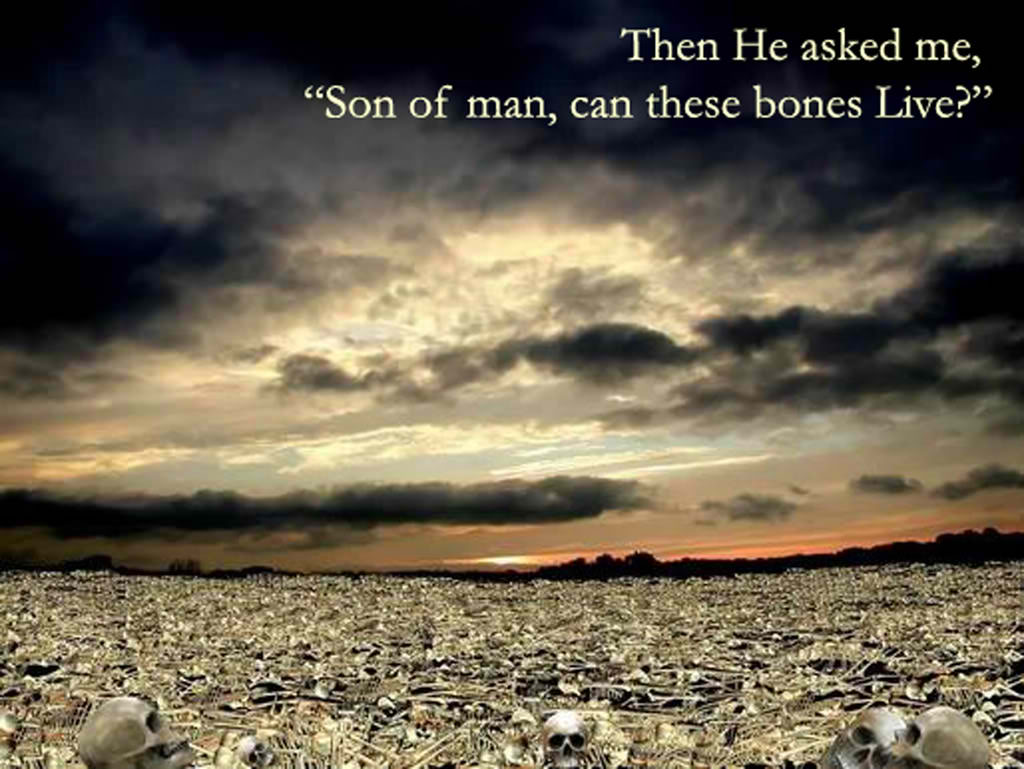
drybones

ParanormalChrist’s genesis is the very ambiguous event that we call the Resurrection of Jesus.  It is this singular event that has shaped the contours of faith, belief, hope and dared to challenge the norms of creation by declaring that the impossible has happened and it has happened definitively in Jesus.  And this impossible event, this aporia, this enigma, this non-analogous happening is the very event that generates hope in people of faith.  Yet, this event has been too domesticated and beaten down to mean much of anything anymore. It is a routine point of dogma, something people believe in without any substance to that belief.  It has become nothing more than the evidence to support our faith that Jesus is God’s Christ, while the concept itself has shifted to the wayside and been relieved of its heavy theological weight.  Yet, we should not let Resurrection off the hook so Gnostically…I mean easily.

During this Eastertide, however, we should note that resurrection in the New Testament and in early Christian faith is not simply a “proof” of Jesus’ identity.  It’s not simply the means whereby death is defeated, and therefore, our souls may one day take flight to Christ.  The Resurrection of Jesus is not something that confirms our Trinitarian belief, somehow affirming the metaphysical connections between Father and Son as eternally related beings.  In other words, there is so much more to the paranormal theology of Christianity and resurrection than is common amongst popular preaching and it all begins in this part of the Christian year in which we now find ourselves: Eastertide.

The notation of this season as Eastertide is fitting.  Eastertide, or the period that exists between the Resurrection of Jesus and Pentecost, is appropriately called such because it carries with it the connotation that what has happened ambiguously in the tomb (and it must be ambiguous since no one was inside the tomb to witness the mechanizations of resurrection or how it happens) has created a tide of new creation that sweeps across the hills of the world with the tomb of Christ as its epicenter.  As the Christ event emerges from the tomb, creation is peeled back.  Its earth is moved.  In a moment similar to the movie Inception, when the city is folded in over itself and a new reality is created amongst images that intercept our conceptions of what can be, and what is normal, the resurrection of Jesus inverts the walls of the tomb and creates a space that has never been seen by anyone but those who dare to rush into the tomb and participate in the Inception of the Christ.  The Christ delves into the consciousness of creation, into its deepest darkest spaces.  He takes up habitation in the recesses of the being of creation, the mind of the earth, and emerges to start a new tidal wave of paranormality that sweeps across the landscape leaving nothing untouched as it moves across the lie that is our perception of reality.

This Eastertide cannot be stopped.

It cannot be repelled or stuffed back into the recesses of the tomb; it is a theological tsunami that covers creation…the after affects of which forces everyone to participate in this new creation.  Even those that deny the Eastertide has arrived are still helpless amongst the waves of resurrection that surround their being and often extend newness to them in ways they could never acknowledge.  Eastertides efficaciousness is not predicated on our reception of it.  The Christ has emerged, the new creation has been pushed up from out of the ground in tectonic fashion, and all of creation benefits from this sovereign Eastertide that wraps us into its swells.  Eastertide is not a choice we make; it is the new creation begun in the paranormal event of Resurrection that is the new condition of the world.  Eastertide is grace, not a choice…the grace of a new impossible existence that is now a permanent part of creation…compliments the Inception of Christ.

Thus, Eastertide is the remainder of the Resurrection of Christ, the indelible imprint on creation of an ambiguous event that begun and continues via the imprint of the body of Christ that was rustled from its lifeless state against the cold stones of the familiarity of our lives and our boring dogmatized world.

But we fail to see this over-arching quality of resurrection because we have drained it of its significance and its theological depth.  We have turned it into a “historical” event but have given up on its “historic” meaning.  Preachers climb into their pulpits across this nation and testify that the Resurrection is the most “historical” event in history…having more “proof” than any other event in history, etc., etc.

These proclamations miss the point.

When resurrection is reduced to such, rather than seen in its grand theological and cosmological perspective…it is worthless.  It is just a thing in the past that verifies our present faith…not something that conditions are present faith and uniquely qualifies Christian hope as it did for so many Christians who first believed in its reality.  When resurrection is just FAMILIAR dogma it becomes empty because it is just an event that makes my present faith possible, it affirms what I think, feel and believe…it is not something that ambiguously sets the parameters of faith as such.  Even worse, we lose the very thing that makes the flavor of our faith Christian.  And there is nothing more uniquely Christian than Resurrection.

Resurrection is the intrusion of the paranormal into creation creating a New Jerusalem whereby hope is redefined and Christian eschatology more uniquely defined.

Resurrection is a game changer.  It is THE event that shapes Christian thought and praxis, and not because it confirms the identity of Jesus or confirms the ability of your soul to go live with Christ.  It is a game changer because it is God’s statement that our bodies matter because the Body of Jesus mattered!  That God was so passionate about creation and our bodies that God raised up the Christ in bodily form (not to mention the idea of incarnation is also a very body heavy concept) is the declaration that God is just as much interested in our material world and our material redemption as God is our spiritual redemption.  Eastertide is the renewal of material creation…not a flow of water beneath the surface that makes unseen spiritual changes!   And if we take the idea of resurrection seriously, it may even be the case that God is more interested in the material than the spiritual…as even the Christ makes subsequent appearances post-Resurrection in material form.  That God raises Christ means that whatever it means to have life in Christ and hope in the God…is to mean that in some way our physicality is redeemed and not hostage to the typical cycles of death.  God could have given Christ a soulish resurrection, but such would not have created the alterity necessary to change the structure of creation to such a degree that redemption could be redefined and the ultimate telos of creation redirected!

You will hear some commentators call the risen Christ’s body a “spiritual” body or a body that was “special” but this is NOWHERE IN THE TEXT!  Even one of my favorite theologians Paul Tillich makes this mistake on philosophical grounds.  We may not like the idea of a physical resurrection or think it is a rudimentary belief of ancient peoples, but that does not change the hard core positioning of this belief in the early Christian community and the power it wielded in shaping eschatology.

The very clear connotation of the Gospels is not that Jesus was a new spiritual substance, but that Jesus’ physical body was resurrected and seen and touched by people who knew what his physical body looked like!  To interpret these post-Resurrection scenes as mystical Christs’…or Casper Jesus such as we see in John 20…is absurd and not part of the plain meaning of the text.  It is our way to reduce the reality of the resurrection…to not face the fact that the Resurrection is paranormal.  It cannot be assimilated into our ideas of what is acceptable.  If God was interested in being normal and doing things the normal way…he would not have chosen to raise dead people nor produced a bunch of idiot believers that would believe in this absurdity.  This is not normal; this is paranormal.

The story of Easter is paranormal.  It cannot be domesticated.  It cannot be reduced to spiritual meanings because it is a very physical intrusion.  It is paranormal hope in the Rising Dead!

But what is this paranormal hope?  What hope does Eastertide bring that begins in the tomb and puts an exclamation point on the importance of our physical bodies to God in Christ? (this should not be new either folks, in Genesis Jacob’s body matters as the people of God take what’s left of his body to Canaan from out of Egypt where he died.  See Genesis 50…and also Ezekiel seems to think our bodies matter.  See chapter 37)  God has been interested in resurrecting and preserving bodies as a part of new creation throughout the entire story of scripture…and the hope of Resurrection that is found in the Resurrection of Jesus is our Resurrection.  That’s it.  That’s the revolutionary hope.  Don’t seem so disappointed…let me explain.

Our hope is NOT eternal life.  Our hope is NOT an afterlife.  Our hope is NOT that our SOUL goes to heaven when we die.  This is NOT our hope…and I would argue that this is not even scriptural.  This is pagan; this is Gnostic; this is Greek; this is NOT a Christian perspective and it is not grounded on solid NT Theology or biblical studies.  Our HOPE IS, however, Resurrection.

The early followers of Jesus did not follow Jesus because he was the first guy to come along preaching an afterlife in God.  Afterlife was not a new concept and Christians did not own the block on this idea.  It is at least as old as Egyptian civilization and we have evidence it is probably older than that.  Jesus did not just come along and give his version of how to live life because his version of after life was better.

The thing that is unique about Christ is that at the END OF HIS LIFE, his life was taken back up by God in the form of Resurrection.  Resurrection is the NEW IDEA.  It is the hope that has captivated the people of God from the time of the Maccabees to the time of Christ.  Part of God renewing creation is the literal renewing of creation!  Go figure!  And part of that renewal is as the Apostle Paul stated…Christ is the FIRST FRUITS of the new creation, the new harvest…of the resurrection of the dead.  And because Christ is the first-fruits, we can anticipate their being a second fruits harvest.  That harvest IS the HOPE of all Christians.

Early followers of Jesus did not follow him because they thought they would live forever with God.  Plenty of philosophies and religions already taught that stuff.  What gave the Christ event its unique quality and impetus was that the follower of Jesus had hope that they too would be part of the new creation that was started in God raising Christ and would continue in their own resurrection…their own BODILY resurrection.   Why else would Paul be so adamant about the supreme importance of Resurrection in 1 Corinthians 15?!?  He writes (NASB version)

“Now if Christ is preached that he has been raised from the dead, how do some of you say that there is no resurrection of the dead?  But if there is no resurrection of the dead, NOT EVEN CHRIST HAS BEEN RAISED!, and if Christ has not been raised, then our preaching is in vain and your faith is also in VAIN.  Moreover, we are even found to be false witnesses of God because we testified against God that he raised Christ, whom he did not raise, if in fact the dead are not raised.  For if the dead are not raised, not even Christ is raised and if Christ is not raised, your faith is worthless; you are still in your sins.  THEN THOSE WHO HAVE FALLEN ASLEEP IN CHRIST HAVE PERISHED!…but now Christ has been raised from the dead, the FIRST FRUITS of those are asleep

Paul is directly relating the resurrection of Jesus to a resurrection of the dead and arguing that they are co-dependent!  One implies the other.  The Christian hope is not that we live with God after we die in the form of some weird thing we call a soul that is non-identifiable or non-localizable.  If we are counting on our souls to be with Christ we are of most folks to be pitied because our hope is not in the perpetual life of our soul.  Nice try Plotinus, but I don’t think so.  This is Greek pagan Gnostic religions and this is NOT Christian and I loathe that is has become a part of Christian belief in the present…and not only that but to the detriment of a robust Easter resurrection faith.

Our hope is, rather, that if we have life after death after death (and I mean the double negation there)…it is because God CHOOSES to raise us up as God also raised up the Christ!  Our lives and our existence in God after this life is not the result of a paranormal nature we all possess that ensure we exist either here or there after we take our last breath.  Rather, as Christians, our only HOPE and the very unique hope that made Christianity a different kind of faith was that people had the audacity to believe that God raised up the physical Body of Jesus as a sign of his victory over creation and set the parameters of Gods restorative goals…and so too God will raise up those who trust in Christ even though we perish within the confines of History.

This is the scandal of Christianity folks…that people actually believe they will be bodily raised as a part of God’s redemptive plan for the world.   If we are to live after we breathe our last…Easter faith teaches us, the Gospels teach us…that it will be because God resurrects our physical bodies and NOT because our soul goes to live with God.  Easter does not simply confirm the identity of Jesus as God’s great Houdini moment; it is the content of what matters to God and a foreshadowing of the direction of the world.

This sort of faith is not normal…it is paranormal…it is the belief that our dead corpses will be restored by God (a very grisly scene of faith if there ever was one) and it is only in the audacious confines of Easter faith that we can believe such nonsense.

Crucified God: Jesus wasn’t kidding, God really forsook him

My God My God

“My father, if it is possible, let this cup pass from me…” (Matthew 26.39)

“And he took with him Peter, James and John, and began to be very distressed and troubled” (Mark 14.33)

“Father, if you are willing, remove this cup from me…And being in agony he was passionately praying and his sweat became like drops of blood, falling down upon the ground” (Luke 22. 42 & 44)

“My Soul has become troubled, so should I say, ‘Father, save me from this hour?’ But for this purpose I came to this hour” (John 12.27)

An often neglected aspect of “Good” Friday and the very tortuous circumstances that enveloped Jesus is a very clear biblical picture: Jesus was human.  Jesus was not a mind reader, he was not a fortune teller and he did not posses X-Men type powers that allowed him to sustain these brief moments of hell leading up to his betrayal, trial and final execution.   Jesus was fully human and we would be remiss to read the story of the passion of the Christ this Easter as a cheap gloss whereby Jesus (who is also God) knew that despite all these horrible things that were about to unfold, in the end it would work out.

The events of Passion in the Gospels are not just nice details to fill our bibles so that God actually has a story of God’s death.  The details are not immaterial, meant to simply tell us the “how” and “why” of Jesus death.  In other words, the details mean something.   When we overly divinize Christ too soon the details become moot because Jesus knew what would happen, Jesus knew he was the supreme lamb and he knew as God that he would be resurrected. Jesus has no reason to be worried; he knows resurrection awaits him.   If this was the case, then how is the sacrifice of Christ really a sacrifice?  If we lay down our lives for our friends, yet we know that our life will again be taken up…is the loss of our life really love?   Are the verses above simply wrong?  Did Christ not really experience despair and did he not mean it when he asks God to “take this cup from me?”  If this is the case, then I struggle to understand why Jesus would pray so hard that something that seems like “blood” would perspire from his forehead.  A man who knows the end does not pray so fervently.

What the gospels present to us is a very dialectical view of Christ.  We often look at Jesus as this one who marched proudly and boldly to his death.  He knew his hour had arrived and he bravely stretched out his back for flogging, he boldly spoke truth to people who had authority to kill him and he unflinchingly stretched out his arms on a cross as he was welcoming the nails that would drive through tendons and bone.  But this is not the only picture of the Gospels; it’s not even a dominant picture.  Christ is not so bold and he is not looking forward to what seems to be developing all around him.

In the Synoptic Gospels (Matthew, Mark and Luke) we get a picture of Christ that prays the unthinkable and is deeply distressed by the events of this week.  The synoptic Christ is NOT looking forward to a potential trial with authorities.  He is not looking forward to potentially facing a death sentence.  Matthew and Luke tell us that Jesus even prayed…”if this cup can pass…then please make it so” and Mark tells us that Jesus was greatly disturbed and filled with inner turmoil.  Why would Jesus have these feelings if they were not genuine?   How could his deep distress be justified if this is a man who knows that in 3 days it will be fine?

Yes, Jesus does end his prayer with “not my will, but yours be done,” but this is simply an affirmation that Christ has surrendered himself to the mission of the God he serves.  Ever since the scene of his baptism the life of Jesus has not been animated by his own words; it has been a mirror image of God to the world via his ministry.  Jesus has been busy proclaiming the Kingdom of God and performing visible manifestations of this Kingdom.  If God chose to end his Kingdom proclamation then so be it; Jesus cannot resist what God is doing.  But, to this God that Christ earlier in the Synoptics calls his “father,” this God with whom Christ has a much more intimate relationship than is normal, he asks, “if this cup can pass from ME…make it so.”

The Synoptic Jesus is not bold and he is not excited…and the cliché statement that he was thinking about YOU and YOUR sin…and that this somehow made this horrible trial easier is simply a romantic way to sanitize the crucible of violence and anguish experienced by the human Jesus.  Jesus was tortured, mutilated and turned into a human poster…YOUR sin does not make this easy.

So the Synoptics give us a very hesitant Jesus, a human Jesus, with deep feelings and emotions that stir him to his very being.  They give us a picture of one who is not convinced that there is any “Good” in this Friday.

The Gospel of John on the other hand gives us a bold Christ.  This is the only Gospel that does so.  The Johannine Jesus is not timid and he is not deterred from his coming “hour.”  In the Gospel of John one finds the very famous “lifting up” sayings in which Christ proclaims that he is moving toward this event in which he will be “lifted up” in order to bring all people unto himself.  This is John’s way of pointing his readers to the passion and the “lifting up” of Christ on the cross.

There is also the theme of “my hour” that is recurrent across John’s narrative and this theme enters the Gospel fairly early.  After the introductory portions of the text, chapter 2 presents to us the first miracle of Jesus at the wedding at Cana.  This is the event in which the wedding runs out of wine for its celebrants and Mary asks her son Jesus to intervene.  Jesus replies abruptly, “Woman, what do I have to do with you?  My HOUR has not yet come.”

Another example is when Jesus goes down to the feast at the encouragement of his family in John 7.  The text implies that his family is trying to get him in trouble with the authorities and they slyly say, “well no one does anything in secret when he seeks to be known by others…so if what you do is real, show yourself to the world.”  His family is not supportive here; they are trying to get Jesus jailed or even worse, killed.  The text tells us that his historical family did not believe upon Jesus or his works…and into this context Jesus replies to them, “My time has not yet here…but your hour is always here…you go up to the feast because my time has not yet come.”

Jesus is fully aware that he is a polarizing figure and he knows that if he goes up to the feast at their request that violence could easily ensue.  Jesus does eventually go to the Feast of Booths in John 7, but he does so in secret…he doesn’t want to make a scene because his HOUR is not yet here.   The Johannine Jesus is committed to this theme throughout the Gospel and Jesus does nothing that is inconsistent with him moving toward this enigmatic hour; an hour of which Jesus seems to be aware, but of which the characters in the story fail to understand.

The Johannine Christ boldly steps into his mission in John 18.11 as the Roman cohort comes for him.  Peter tries to defend Jesus through violence and he swings his sword at a nearby soldier striking his ear; it’s a wonder Jesus and his disciples were not all killed then and there.  Jesus tells Peter to stand down and then he asks him, “Shall I not drink of the cup the father has given me?  It is for this hour I have come.”

So in John we have a Jesus who is focused on his mission, boldly moving toward it and in the synoptic we have a dithering Jesus who is fully human and filled with anguish…a very human Jesus who is not so confident.

Yet, even though John sanitizes the human grief of Christ and Luke portrays a Christ who on the cross dies a good death, a death in which he calmly whispers to God, “Into your hands I commit my spirit.”   Matthew and Mark preserve a very early tradition that testified to Christ crying to God in words of honest despair and nothingness.  Jesus does not die peacefully giving up his spirit in Matthew and Mark.  Here, he dies a horrible death of wailing and crying…hurling contempt toward God for what is happening.

This would be an early tradition and is most likely very historical since it would make sense for the community of Jesus to not retain statements made by Christ that would seem to create enmity between Jesus and God.  If you’re trying to spread the good news of Jesus, it’s much easier to do so without Jesus getting mad at the Father from which he was sent and even declaring a firm separation.  Jesus was so adamant in John about his hour and purpose and this cup of which me must partake…yet as he is nailed to the Roman Cross, his body convulsing and consciousness fading in and out…he musters up the ability to scream, wail and cry out to his “Father,” in Matthew and Mark:  “MY GOD MY GOD WHY HAVE YOUR FORSAKEN ME!?”

Do we really take these words seriously?  Amidst the varying portrayals of Jesus and his attitude toward the events of these next 3 days, do we take this witness of Jesus in Matthew and Mark seriously or do we think Jesus was just making a hyperbolic statement on the cross that would provide the gospels with drama that would captivate the readers?

Why would Jesus utter such words?    How does this make sense in a Christian tradition that has so sanitized and neglected to see meaning in these his very last words?  What was Jesus expressing in the scene that theologian Jurgen Moltmann describes as the “Crucified God.”

Jesus has spent his entire ministry proclaiming the closeness of God to humanity.  He has redefined what it means to be in relationship to God.  He has seen people healed in his ministry.  This is a testimony that God is near.  He has been preaching a non-judgmental message of grace that extends to all who will believe.  He has been baptizing people and getting them ready for the coming of God into the world.  He has raised dead people and experienced a closeness with God that heretofore had been unheard of…yet, at this moment when he most needs this God that is so close…this God is in fact so FAR away.  All that he has preached, taught and performed were testimonials to who God is, yet this God does not spare Christ this fate!  Jesus, the one who prayed to this God as his “Father,” is realizing that the closeness and the grace that he has proclaimed…are in his final moments not available to him.

Moltmann says it like this, “When we look at his non-miraculous and helpless suffering and dying in the context of his preaching and his life, we understand how this misery cried out to heaven; it is the experience of abandonment by God in the knowledge that God is not distant but close…In full consciousness that God is close at hand in his grace, to be abandoned and delivered up to death as one rejected, is the torment of hell.”

In other words, the God that animated the very preaching and life of Christ is letting his preaching and life end.  The vision that Christ has for the world is contingent upon his living to continue to incarnate this reality and the God who he feels has called him to this prophetic role is letting it all end in such a horrible way.  The God that Jesus knows so well has turned his back on him and his prophetic mission.  Christ has been left to die by the one he called “Father.”

To make the situation more stark, when Christ asks the question, “My God my God why have your FORSAKEN me?” he is not only anguishing over his own betrayal by God and the tortuous end to which his life has come…but he is connecting his life to the life of God as inseparable realities.

Jesus has fostered a unique symbiotic relationship between himself and the father.  He has understood his life to be the incarnation (though this language is not used in the Gospels) of God to the world.  God is visible in his ministry and his ministry is the visibility of God.  Jesus associates his very life with the very mission of God.  Thus,  for Jesus to end up on a Roman Cross is not just an indictment on a God that has not held up to his end of the bargain, but it is a cry that reflects the most bitter betrayal any of us will ever experience: Betrayal by our closest companions, betrayal by family.

Thus for Jesus the cry of forsakenness must mean not only that he feels forsaken by God, but in the very utterance of forsakenness Jesus is basically asking, “Why is God forsaking Godself!?”  By forsaking Jesus God is not simply forsaking the sage of Galilee; God is turning his back against God.  Jesus is not the only one crucified on this hill; God is crucified.  The narrative of God is so connected with the narrative of Jesus that for Christ to be forsaken and die is for God to forsake God and kill God’s self!  This is an event that is taking place between Jesus and his Father, one to whom he prayed, wept and beseeched would let these events pass.  The Gospels of Matthew and Mark preserve a story that displays an interaction within the life of God…between one that makes God visible to the world and the one that is now invisibly visible to Jesus in his absent presence.  To Jesus, God has become an absent derelict Father!

If Jesus was the Truth of God born into creation, then what happens in this cry is nothing less than God turning against God.

While we are often quick to give explanations in Christian theology as to the “why” of Jesus’ forsakenness, we must refrain from doing so on Good Friday. We may early not want to take Jesus’ words seriously; we may not want to hear his cry of forsakenness for what it really is: the death of God and the grief of one who so believed his life was animated as the prophets of old that he looks to the heavens in utter disbelief that his Words are coming to an end in this penal deed.  We must not, then, say on Good Friday that Jesus died for this reason or that reason…but we must pause and enter the story of Jesus as a man betrayed by his Father and left to die.  Racing to Resurrection Sunday is a cheap way of romanticizing his cry of dereliction and retards our ability to appreciate theologically the meaning of resurrection within the context of utter abandonment.

As we move through the next 3 days, let us not dismiss these Gospel stories and the differing portrayals of Christ…and let us not harmonize their details to the point of making the details meaningless…but let us acknowledge as those who stand around the cross that the beginning of faith is NOT in the events that we will call Easter a few days from now, but faith only begins after God is crucified.  While many religions testify to prophets and disciples dying for the faith, only in Christianity does God die for Gods self and does God declare to God’s self such forsakenness.

Christianity and Capitalism: The Enigma of Capital

Protests at Zuccotti Park

Protests at Zuccotti Park

A Small Explanation

This review is forthcoming in the next Review and Expositor Theological Journal. The theme of the Spring 2013 issue is “Christianity and Economics” and it is largely the product of a series of papers presented by myself and a host of other academic and pastoral colleagues at last years LeftForum @ Pace University in New York City.

The end of 2011 was characterized by a great upheaval and public response to unchecked capitalism across the globe, particularly as the meltdown known as the Great Recession continued to have lingering effects. Images of Zuccotti Park and Occupy protests arose over night as it was becoming more and more clear that nation States and big money had disclosed the real nature of their corrupt union via bailouts and the mystical creation of excess liquidity.

Into this vacuum of despair emerged a number of grassroots and academic responses.

Indeed, the very grassroots Occupy movement was not the work of the proletariat; it was the brain child of professors of anthropology that were able to organize this resistance to a system that has become too big for anyone to stop. Too often, however, the literary and media aspects of the resistance and cultural critique were from the far left intellgentisa. This, and unfairly so, allowed too many folks across various political and religious persuasions to dismiss these events as fringe movements of the Left that were simply trying to usurp societal order and restore the ever feared “S” word: SOCIALISM. Elitist, agnostic leftist and progressive academics and activists were the ones loudly critiquing the many hallmarks of capitalism. Secular culture was engaging and judging itself, while the church and theologians stood idly on the sidelines not wishing to engage this very material problem. While some of our pastoral colleagues in New York were leading marches carrying the golden bull of Wall Street, images that reminded us all of a similar biblical incident involving another golden bull, other pastors were left lost in the gaze of capital and speechless as to how the Christ event might actually become suddenly very practical.

Into this context, my colleagues and I considered it a worthy endeavor to go the scene of the Protests, New York, and to ask in what ways might Christianity challenge the systemic evil of our current economic forms of exchange and how might we communicate this to a population that largely sees Christianity complicit in the conservative neo-liberal economic agenda?

To this end, we were the only group of Christian pastors and theologians that presented papers at last years LeftForum, a conference that had nearly 400 various presentations and speaking engagements. We were the group that refused to allow post-metaphysical thinking to drive the agenda of critiquing the systemic economic ills plaguing us all. While our leftist colleagues were all around us invoking the names of Trotsky, Marx, Luxemburg, Lenin, etc., we were invoking Christian hyperbole, Hebrew Bible social justice texts, Continental Christian theology and even the likes of the most evangelical of them all, John Wesley.

We were challenging the assumption that in order for one to offer an alternative to the unchecked flow of capital and the eschatological dead end of accumulation, one must also abandon Christianity and theological reflection. In fact, as will be argued in some our essays for the upcoming journal, one is not able to stand with the 99% if there is an a priori dismissal of one of the single largest components that the 99% use to navigate the world and make sense of their existence: faith/religion.

We partook in the project with the firm belief and resolve that if we will but only listen to the voices of the Christian past and present, we will find a wealth of resources that will not only call the evil of our present capitalist driven society to the floor, but it will also refuse to let Christian theology and praxis be co-opted by ideological forces that try to confuse their democratic or republican agenda with Christianity. This has gone on too long and it must stop.

To this end, along with various articles that will propose a revolutionary core of Christian theo-economic discourse, several reviews will be contained in this journal that reflect Christian pastors and theologians engaging in texts that are primarily economic in nature. The purpose is to embody how theology and economics might begin a dialogue that is being sorely neglected by much of the church. People of faith should not be disinterested in these matters, for the very folks to which ministry is offered are the ones who are living this economic hell that seems to hang over us like a never ending purgatory.

Thus, this review of David Harvey’s Enigma of Capital is another aspect of engaging Christianity with contemporary economic theory and making resolute our claim that Christianity is not something that is passe or irrelevant during this time of economic change; indeed, it is pivotal if we are to engage cultural phenomena and respond in holistic ways that are not only healthy and economically viable but also comprehensively salvific.

harvey-enigma-of-capital-front-cover

THE REVIEW

Professor Harvey’s book is a passionate Marxist analysis of the current economic meltdown and a review of how libertine capitalism has created the current wreckage. His thesis: capital flow is a system of exchange that is built upon inherent contradictions and fabrications that will organically create more crises than solutions.

He notes that various capitalist crises have been recurring with ever greater frequency since the 1970’s (the emergence of credit) and that this most recent Great Recession is simply a foretaste to the destabilizing of systemic neo-liberal economics that cannot continue ad infinitum under the weight of its own means of production and expectation of a compounded 3% growth. This is why Dr. Harvey calls the recent economic calamity a crisis; it is the rationalization of the irrationality of continual capital accumulation and capital flow.

While economists and politicians the world over are replete with reasons for the current financial crises, Harvey summarizes the issue with a simple definition of capital early in his text. Upon rehearsing the latest “Disruption,” writing one of the most concise synopses of the recent global meltdown and its many domino effects, Harvey presents to us the central concern of his text: Capital flow. He writes, “Capital is not a thing but a process in which money is perpetually sent in search of more money.” This central idea for Harvey’s work demonstrates how this perpetual search is the enigmatic instigator of capitalist crises.

This is the problem with capital: its goal is itself. Capital is a means of creating surplus (profit) relative to the cost and value of services or products produced. This surplus of production, known as capital, has to find newer places of expansion so that continued production and surplus can be absorbed in the market that would allow the process to continue unabated.

Capital, however, is beginning to encounter obstacles that disrupt this flow. Capitals relationship to labor, nature, the lack of new markets into which capital may expand, and excess liquidity to pacify the capitalist symptom are just a few of those obstacles. When this happens, economic crises emerge. Crises disclose the unstable logic of capital, and thereby create the potential for newer systems of exchange that might prevent future occurrences. As Harvey notes, “Crises are moments of paradox and possibility out of which all manner of alternatives, including socialist and anti-capitalist ones, can spring.” Ironically, capital ends up creating an environment in which its own future is questionable.

The coherence of Harvey’s argument is very structured and easy to follow. The text has eight chapters, but it can easily be divided into two sections. Section I (chapters 1-5) is the description of the global meltdown, along with the definition, character and polyvalent functions of capital. This section is a rigorous dialogue with Marxist theory and a scolding critique of neoliberal economic theory that has been embraced by most modern Western nation states.

Section II (chapters 6-8) offers a description of how the natural breakdown of capital affected the entire globe and how the endless accumulation of capital is reshaping many different environments into a form of “second nature” that could have catastrophic consequences. Concluding this section, Harvey offers his own resolutions to the crises capitalism that will certainly challenge his readers.

Overall, Harvey’s text is a good balance between common public prose and an academic analysis of capital. It is a text that can be approached by laymen of economic theory, yet also offer challenges for those of a more academic persuasion. While Harvey is clearly writing from the Left of the economic and political spectrum, his writing is very balanced and he often does a good job of swaying away from ideological quagmires that would distract his audience from his argument. Even though his solutions seem ultra-liberal and utopian, and these admittedly so, the genealogy of capital that he traces leaves little choice to continue down the same unambiguous path.

As an augment to this journal, it should be noted that pastors, theologians and ministers should be reading this material. Economic despair and imbalance is going to be one of the major challenges of the coming decades and the church needs to be informed. Harvey is describing the economic reality of those to whom we minister. If the church continues to be a handmaiden to particular political ideologies then it will continue to be speechless in the marketplace of discourse. Yet, if one is convinced that Christian theology can narrate a different world and is creative enough to offer an alternative reality to the dismal picture of conservative and liberal polarities, then just maybe our eschatology can be begin to take on the shape of Christ and refuse the shape of capital.

The Pope is NOT the Anti-Christ: Tips for reading Revelation

pope antichrist

Let’s get straight to the point: The Pope and his election has absolutely nothing to do with the end of the world. Further, this recent papal election has absolutely nothing to do with a pope that will become the ever allusive “antichrist.” If that’s how you read the book of Revelation, please close your Bibles… now open them and start again. Perhaps read the entire Old Testament before again trying to read the final book of the Bible…a book that is theologically predicated on not only the New Testament that precedes it, but also the theological motifs of the entire Hebrew Bible that precede the New Testament. If you haven’t done that, and Re-membered what you’ve read, then chances are Revelation will prove to be quite a conundrum.

I have some very simple reasons as to why I do not proffer nor correlate papal politics with the Book of Revelation. There is literally a litany of reasons. This blog would not be able to contain all the reasons for not reading the Book of Revelation in such a way that one would deduce the presumed prophetic facts that the Pope, and his hilly city of Rome, is the very larval environment from which a super-human known as Anti-Christ will emerge. Much finer minds and scholars have written entire books on how to read the book of Revelation in responsible ways; ways that do not primarily feed our bizarre appetite for destruction, but rather offer the world and the church hope in one the New Testament called the Christ.

I understand that it is en vogue, at least within conservative evangelical circles (and Baptist circles), to believe in the Rapture and to be able to “plainly” see this in the biblical text. Even in my own ministerial context, most folks polled would say “yes” if asked if they believe in a future rapture and “yes” they believe that Rome has something to do with the antichrist and the last days. The question is not one of whether many people believe something. Indeed if enough people believe something long enough then for them it becomes the truth, even if no one else shares that belief. Another way of saying it, we don’t know what we don’t know. The real question is whether such belief is warranted through biblical, historical, traditional, theological and philosophical grounds. I would contend that the idea of “rapture,” and then all the premillennial theological baggage associated therewith (such as popes and antichrists), is absent any viable reasons for believing in the system of interpretation that is required to hold such a worldview, let alone call it the Christian reading.

Before I give my reasons, let me first say that this will not answer all detractors nor will it seek to define in entirety all of the following concepts. The most common form of remainder will be in particular interpretive questions, such as the meaning associated with particular concepts with which rapture theorists have made their most hay. Concepts such as: the mark of the beast, the tribulation, the great whore of bablyon, white throne of judgment, the destruction of satan, etc. But let me be clear, under a responsible form of biblical interpretation all of these ideas will make sense and do have answers; they just won’t have the very “literal” answers that we are so used to receiving.

Let me further add that I am a recovering premillenialist. In other words, I used to believe that in some strange way the pope, Rome, and the antichrist were all intimate parts of the end of the world that would play out during a 7 year period…3 ½ of which would be very bad for people who did not love Jesus. Until I was 19, I was a card-carrying member of Tribulation Force Christians. I was raised on the ideas of John Hagee, Jack Van Impe, Hal Lindsey and your local evangelist who specialized in the Book of Revelation. I have heard more sermons on 1 Thessalonians and its rapture teaching than most folks could probably ever care to hear…but I loved them. I loved hearing those sermons. In fact, when I first began preaching I even preached the idea of “rapture” and all the dispensations associated with it on more than one occasion. Yet…these ideas also tormented me. I have been left behind, personally “left behind,” at least a half-dozen times.

So at 18 I started asking questions…questions to which those preachers whom I respected where unable to give sufficient answers. I still held to my childhood faith, the faith I was raised with, but the more I pondered and asked questions, rather than just believe something because some old guy told me this is how I was supposed to read the Bible…the more I began to be open to a different view of scripture. I was looking for a reading that made more sense and made the dark pages of Revelation less opaque.

I personally believe this quest was led by the Spirit. And after this quest, for the first time I was able to actually read Revelation not fearing its content, but actually allowing its words to feed my spirit in the present. It was no longer a word about future destruction; it became a word about present hope and grace in my life and the life of the world. For this I am thankful.

So here’s a little of what I have learned, why I don’t believe in the rapture as its usually taught, and therefore do not fear the new Latin Pope who will, according to some, be the very material appearance of the son of perdition.

First, Revelation is apocalyptic literature, which means it should be read as apocalyptic literature. In the Bible there are many literary forms: poetry, narrative, mythology, law code, history, letters, prophecy, gospel, apocalyptic, wisdom, etc. All these literary mediums are to be read in particular ways, ways consistent with that genre if we are to understand their messages. If we read all literary types the same we will find that nonsense begins to emerge.

For example, do we read the newspaper or online news articles the way we read a poem? Of course not. To do so would mean to miss the point of the poem or the prose. We understand that one is about conveying information and the other is about captivating our imaginations and reinterpreting our worlds. Both forms of communication are true; they mean something, but they communicate differently and with different intent. We know that HOW they are written matters…and we take this into consideration when reading them.

Another example, would we read a history book the way we read L. M Alcott’s Little Women? Of course not. One is a story in history that is fictional with freedom to create another world; the other is a non-fictional biased observation on events that have happened in the past. They both use words, both can be read “literally,” yet we know to read one like the other would confuse them and distort meaning.

Yet we do this ALL THE TIME with the Bible. We read every book like its every other book. We never consider that the wisdom literature is different from the exilic prophets or that the Gospel of Matthew is different than the Book of Revelation…and as a result we read Revelation incorrectly. Or worse, we do make distinctions but do so unconsciously and therefore unintentionally coming up with interpretations that may be totally foreign to the text we are reading. We come up with crazy ideas like popes, antichrists and beasts that arise from the ocean in some weird version of Alien vs. Predator. We do this because we are reading apocalyptic poetry like it’s a newspaper article or a Pauline letter. We do not approach it as a work of APOCALYPTIC LITERATURE and then attempt to interpret it. We approach it as a flat literal text that can be read like all the other books in the bible. Next time, write your sweetheart a love letter and tell her to read it the way you read this blog…see if she’s able to understand the medium of your words.

So Rule #1 about biblical interpretation: If you do not understand the genre type you are reading and how its medium of communication functions on a literary, and therefore, historical level, you will not understand much of scripture and you will continue to read INTO the Bible what you believe because of what you have been taught. The Bible will never become strange; it will never become new; you will always see the same Bible because you read all of the Bible the same way. So Rule #1: know what kind literary genre is being used and then read it in ways consistent with that genre…

This is one reason I can say without doubt that this Recent papal election has nothing to do with the end of the world.

Second, to read the Book of Revelation in a purely futuristic way…as a book that does NOTHING but tell us the future is to question the very reason it is incorporated into the Christian canon. I struggle to understand why, why, why, a book would be included in the Bible that was ABSOLUTELY USELESS to every Christian who has ever lived, and every Christian community that has ever believed Jesus was the Christ, until the present. In what way is the Book actually inspired if it was worthless to every reader until the present? I thought all scripture was inspired and worthy for instruction?? But when we say that this book tells us all the above about Iran and Russia and the Papal antichrist, we are saying exactly this…that the Book of Revelation was useless until OUR generation arrived on the scene. I wonder what the preacher did when he came to this text say in the year 400 or 1000 or 1530 or 1776?? Did communities simply say, “Well guys, the Book of Revelation is not for us…we don’t live in the last days, so we will refrain from using it as instruction for our Christian lives because we are not the ones who can understand it.” What would be the point in having a book lie dormant for nearly 1700 years in our Christian canon and how would it be inspired?

In fact, historically the opposite was the case. Communities have always used the Book of Revelation to describe their relationship to the world and Christ’s victory over the enemies of God. Augustine used it when Rome was sacked around 400, the Catholic Church used it around millennial fervor in 1000, Martin Luther used it as allegory to say that the Roman Church was the Great Whore (he thought HE was living in the last days), the Reformed used it as a book that helped them make sense of differing shades of Protestants in 1600 and the American Revolutionaries used it as a paradigm for interpreting their relationship with Great Britain…and this to name a few. This text has always been appropriated by believers as a source of hope and to orient the way they worship. It was not relegated for use by the ENLIGHTENED ones in the 21st century that would finally KNOW ALL THE ANSWERS.

We have to be some of the most prideful Bible readers to assume that all that came before us were idiots and now we have the answers…but that is what a Rapture belief does. It assumes that now we have the answers, we know why it is inspired and we are able to use it better than any other generation because we have acquired the right form of interpretive knowledge. Well, that sounds a lot like Gnosticism and it is not very holy, because holiness is not typified by self-righteous knowledge.

A further point here is that this Book of Revelation was historically a Letter to Seven Churches. Why would John write them a letter that was not really for them? Why write a letter to people, the contents of which would not be helpful as they engage the world? I think it much more likely that John wrote words to them that would empower them in their contexts and give them hope in Christ…and that the content of the letter, (as all letters we write to one another), would have been understood by its recipients. A letter written to people that would not be able to understand every detail and all its symbols, metaphors, etc., is a useless letter…both today and in the First Century. And if this is the case, we should not ask the question, “what does revelation mean for US here today?” before asking the primal question, ‘what did the Letter of Revelation mean to those Seven churches and what might that say about our present?”

So this is reason #2 I do not fear the new Latin pope is Spanish Antichrist spoken about in Revelation 26.66

Lastly, we must also understand that to read the Book of Revelation in a literal fashion and to do this under a premillennial paradigm is a VERY new Christian thing to do. In fact, there is no historically Christian warrant for reading Revelation in this way: raptures and trib forces and literal bottomless pits and all.

This idea was germinated in the thought of John Nelson Darby in the early 19th century. Darby did not have any formal theological training but a zeal for the work of the church. He was not the first to interpret history across time periods, but he was the first to develop an entire dispensational system from the biblical text. He interpreted all of scripture within what he called 7 “dispensations” or time periods of history. Each dispensation was a different epoch of history and linked with a unique covenantal event in scripture. He then read scripture as being revealed across these epochs. His reading of scripture was very literal and did not take into consideration literary, historical and canonical issues when reading the Bible.

His ideas were popularized by one Cyrus Scofield, an evangelical leader in North America who was won over to his ideas through Darby’s work in America. (Darby was British of Irish parents) Scofield published his own KJV reference bible and interpreted all of scripture in Darby’s dispensational way. His Reference Bible was the key to engraining dispensationalism in the evangelical psyche as its study notes were alongside the pages of scripture so that the pious believer could have easy reference to this interpretive system (you can still buy a Scofield Reference Bible at most bible retailers). It was published in 1909 and was widely used in churches and Bible schools. Though it was rarely used by Universities or seminaries it became the most influential bible in North America during the 20th century (a century begun by Pentecostal end times fervor if you will). This bible became so influential that it was the main source for resolving disputes or matters of interpretation across many areas and it remained popular among conservative Christians, evangelicals and Pentecostals. It is because so many folks read the Bible in the shadow of Darby and Scofield (none of which were academically trained or biblical scholars to any degree) that people read the book of Revelation literally and think that this recent papal foray is the foreshadowing event of Armageddon.

So let me say this another way: no one of Christian note, until Darby and Scofield, interpreted the Bible in a full blown dispensational way and worked out an entire system of interpretation predicated thereon. Not Jesus, Not Paul, Not Polycarp, Not Tertullian, Not Augustine, Not Aquinas, Not Gregory, Not Luther, Not Calvin, Not Arminius, Not Wesley, Not Whitfield, Not Edwards, etc., etc.,…NO Christian thinker prior to Darby would have understood anything Darby was doing with the Bible. It was not historically Christian, it was not biblically literate, it did not make philosophical sense, it disregarded the literary genres of scripture, it usurped a full version of inspiration…AND last but not least, it was a liberal modern reductionistic way of reading the Bible by harnessing all the mystery of divine text into a model or system that could contain its truth. Conservatives eat your heart out and hate modernity, but there is nothing more modern than the latter. The very ones who accuse liberals of reasoning away text have beaten the Bible to death with Reason…and yet claim to not use it in their interpretations.

These reasons do not even begin to scratch the surface of why I do not think that the recent Papal election has anything to do with the end of the world…meaning, I have not scratched the surface of why I don’t read Revelation as a literal book about literal future events. I could go on to talk about how interpreters of Revelation often pick and choose what texts are literal and what are to be understood symbolic…often making these decisions arbitrarily. I could go on to talk about how reading this book literally as a future map does nothing to edify the church or make Christians. I could go on to offer a liturgical critique, asking why so many modern readers who believe in this “rapture” and all the stuff that necessarily follows it…like concern of papal politics is missing entirely the general usage of the Book of Revelation as a book of prayer, praise and adoration. Some of our greatest hymns are found within its pages…I could go on…but I won’t.

When I come to the Revelation I read it for its beauty; I read it for is power and its promise; I read it and never cease to be amazed at how John gives us the story of God in Christ in such captivating ways that challenge our view of the world, of good and evil, of salvation and sin, of redemption and judgment. In short, I read it as a good word to us in the NOW and any interpretation that fails to demonstrate how scripture can be incarnated into the community of faith is an interpretation of which we should all be suspect.

So Popes, Vaticans, and hairy scorpion monsters come what may…The city on a hill from which evil is performed is always performed within the shadow of another hill in which evil was already defeated.

Parables: Stories About the End of the World

Mark misunderstood gospel

The following is a sermon I preached in year B this past summer.  In my ministerial context, sermons are generally 20-30 minutes.  This one is on the 30 minute side due to the pedagogical material at the front of the sermon.  I hope this helps you wrestle with this very short Markan parable as much as it did me.

Text: Gospel of Mark 4.26-29

Of the many things that we think, and know, and believe about Jesus, one of the most certain realities of the nature of his ministry and life is that Jesus taught by means of parables.   This is a truth and illustration to which there is more testimony and evidence than many of the orthodox beliefs we have about Jesus such as: the virgin birth, the trip to Bethlehem, that Jesus had siblings, or that his father’s name is Joseph.  These are things we believe…but for some reason the authors of the NT and the early church felt that it was more important to preserve this form of teaching by Jesus than it was to verify and create a mountain of literary evidence supporting the very historical foundations of our faith.  Why is that?  Why does our faith tradition preserve the teachings and presentations of Jesus to a greater degree than the hardcore historical facts we think necessary to hold such faith?  Haven’t all people in all times been as hung up about history as we are today?  The most obvious response must be that there is something particularly special about parables…something that we better take note of if we are going to read the Gospels faithfully.  There must be something so special about parabolic expressions that the church knew it was not easily grasped, harnessed or interpreted, but it understood that if we’ll stick with it and hang on…perhaps the world at the end of the parable will be different than the one that existed prior to its utterance.

You see, Church, we often find ourselves to be like many of the people that surrounded Jesus during his ministry.  We’ve spent some time observing him, hearing him, and we think we know what he’s saying…yet Jesus keeps speaking to us in Parables.  Aren’t parables the expressions of children??  Stories of fancy meant to fill our imagination and just give us another entertaining way to learn?  Wasn’t Jesus just being a good teacher and implementing the method of teaching that best suited the learning style of those around him?

If we already know the answers than why does he keep teaching us like we’re idiots?  If we already know the parables than why does the world look like it did before Jesus told them?  Could it be that the parables we think we understand, we don’t really understand at all?  Could it be that we have taken the parabolic mystery and challenge out of the parable and reduced it to simple moralizing or spiritualization and in the process drained the parable of its power?  Do we read the parables of Jesus…see the easy answer and then think we have it?  Might I suggest, if we read the parables and the answer is easily configured and assimilated into our lives…well, we’ve probably missed the point of parable.

Alan Culpepper, my teacher at Mercer, described parables in this way:

Parables compel us as their hearers to see the world in a new way.  Whether used in debate or didactic settings, parables point to the improbable in the midst of the ordinary and force us to pause to consider it.  They shift our angle of vision…the parabler sees something no one else sees.  He or she conveys that vision metaphorically or paradoxically through the out of place in the midst of the common, inviting us to puzzle over the relationship between the two.  The parables, however, are so unstable, elusive, and revolutionary that the church has tirelessly found ways to resolve the parables tensiveness, reduce them to simple lessons, and beat the life out of them by making them familiar…Fortunately, Jesus’ parables resist this reduction and give us the ability to see the world as he sees it. (RE journal Spring 2012).

Parables are meant to use ordinary events, ordinary things, and create an unordinary reality.  They are meant to challenge our ideas of how the world works by using our very ideas of how the world works…Parables are mechanisms that are employed in very specific situations, at specific times, to challenge a specific notion or to interject an idea into a sea of ideas that are misguided and shallow.  In other words, a parable is the teaching device by which Jesus blows up our ideas, our opinions and our worlds.  The option to not have an opinion about the parable or to not come to some kind of conclusion regarding its meaning is not an option in the face of the challenge of Jesus telling the parable.

Jesus considered his ministry to be the very manifestation of the inbreaking of the kingdom of God…and this method of teaching, parables, is the method by which Jesus is confronting the world in various contexts to see what that kingdom is all about.  Parables are not simple lessons that we use in Sunday School to learn the basics of loving Jesus…parables are the very tools that Jesus uses to say this is the end of the world as you know it!  The Kingdom of God is near…its right here around the corner…listen to this parable as the world comes closer to its end!  I am teaching you this way because the future that is myself has broke into your present!

The context of the ministry of Jesus is apocalyptic expectation.  The time of Jesus is ripe with expectation and a multitude of religious groups and people that are anticipating some form of God breaking into their present…but what the Gospel of Mark tell us…is that this breaking, this tearing of reality occurs before Jesus even utters one word of a parable and in a way that is not expected or heard by anyone…other than as the sound of thunder.  Mark is so convinced of the utter ripping of reality, the tear of God into history, that he places this event of divine coming at the very early stages of his Gospel.

In Mark 1.9-13…we get the brief mention of the baptism of Jesus.  What is unique about this story is the word that Mark uses to describe the event of God’s spirit descending upon Jesus.  Mark 1.9-13 reads as follows:

In those days Jesus came from Nazareth in Galilee and was baptized by John in the Jordan.  Immediately coming up out of the water, He saw the heavens opening and the spirit like a dove descending upon him and a voice came out of the heavens: You are my beloved son, in You I am well pleased.  Immediately he was compelled to go into the wilderness by the Spirit”

The story tells us, very calm and collectively, that God “opened” the heavens and the spirit descended…but the Greek word does not connote a nice opening scene that fills some piece of Romantic literature as the dove of God wisps away onto the shoulder of Jesus.  What the Greek says is that God “RIPPED” “TORE” open the heavens…and that tearing of the heavens leaves a scar on creation that cannot be put back together.  The world will never be the same again!  And this apocalyptic event that takes place at the baptism of Jesus happens before Jesus does anything in ministry…and Mark wants to tell us as readers that from here on out…the world is different.  The end has come into the present…and Jesus will then teach in a way that is reflective of the end of the world and remind us of the pending Kingdom of God that is already at work.  Parables are a means of teaching in this new apocalypse…or this new revealing of who and what God is.  Parables have to do with taking the ordinary and placing them within the context of a heavens that have been torn apart by God and will never be fitted back together!

Understanding this, we come to our text, and we discover that this parable is something we already know.  Perhaps we give it a very shallow read or glance at it quickly…but since we are such stellar students of Jesus and already earned an “A” in his class…we think we don’t need this lesson…but lets her Mark anyhow.  Turn to our text…Mark 4.26-29.

At first glance, this scripture seems pretty easy to grasp.  We can read this parable and it seems pretty obvious what Jesus is saying right?  The kingdom of God is basically the small seed that is planted by the farmhand.  The seed is sown, as we saw very meticulously by Jesus in the lengthy parable of the Sower in first part of chapter 4, and it will produce a harvest that will be ripe.  In this parable, Jesus is clearly telling us that the Word is the seed, as he does in v13 on the first parable, and that the Word will produce a harvest.  We don’t know how, but it will be evident when we awaken after our slumber.  At first glance church, this parable is obviously part of what we remember Paul telling us is the milk of babes in Christ…where’s the meat of the Gospel?  We’ve already got this figured out…Next please.

But let’s pause here just a bit longer.  This first half of the parable is taking the ordinary practice of agriculture and noting its regular results.  This makes sense to any farmer or hired hand that plants seed.  They can relate.  But let’s ask a few questions.  What is the Kingdom of God here?  Jesus says the KOG is like a “man” who casts seed upon the soil.  Who or what is the soil here?  And how is the harvest produced?  The parable does not tell us of any extant causes of the harvest.  It does not mention managing the soil, or sunlight, or even water.  The parable doesn’t give any details as to how the spreading of seed in the soil produces a harvest, yet it does.  For many of us, we would walk through this field and we would be thinking of all the biological things occurring at a micro-biological level and we know WHY a harvest is produced by planting seed.  We can scientifically explain it.  But for someone hearing this parable for the first time, they walk through the same field and they have no idea how that happens.  They count the giving of the earth as a miracle, not a biological fact to be manipulated by farming techniques.

Many times this part of the parable is interpreted to easily.  But I can already here the objections, “Pastor Nathan, the Gospel is easy to understand…we shouldn’t have to think about them this hard to understand them.”  If we think that parables are supposed to be easy to understand, what do we make of Jesus when he says earlier in our chapter, “To you has been given the KOG, but those who are outside get everything in parables, so that while seeing, they may see and not perceive, and while hearing, they may hear and not understand, otherwise they might return and be forgiven.”  Seems like in Mark Jesus speaks in parables precisely because he doesn’t want people to understand…  Moving back to interpretation, the man in the parable is often interpreted the one who preaches the Gospel.  The preacher’s throw the seed onto soil.  The soil is understood to be us or those people that hear the seed of the word and respond.  Our response is the harvest and then the one who proclaimed the Gospel initially can come along and reap the harvest of our response and those around us.  In other words, this is interpreted as a passage that reinforces our boring imagination as we think it’s about saving souls, even though Jesus has said nothing like this in this passage or to this point in the Gospel of Mark. In other words, we take this to mean, “Let’s spread the word to get people saved so that they can be the harvest.”  Anyone who has read the Left Behind books knows this to be true.

There are problems with this simple interpretation.  First, it’s not reading this parable as a parable.  It’s reading it as an analogy in which we correlate elements of the ordinary to elements of our preconceived ideas of salvation, which is a problem if a key to understanding parables is our initial worldview.  In other words, we are doing what Dr. Culpepper described as “tirelessly finding ways to resolve the tense nature of the parable.”  If the parable, no matter how many verses long, doesn’t shake us to the core, than we’ve already missed it.  Do not pass Go.  Do not collect $200.  Go back and try again please.

Second, every analogy fails.  Rather than trying to see the “spiritual” meaning in this parable, let’s just let it be.  Maybe this parable is simply saying that the KOG is about the mystery of the gift of the earth.  The KOG is not manipulated by human effort.  It is not the product of any specific ministerial paradigm or purpose driven model.  The KOG is not simply the man that preaches.  The KOG is not simply the place to which the seed is thrown.  And the soil cannot be the church or anyone who listens.  Soil is not active…it is acted upon.  The soil is a passive recipient of the seed…it doesn’t choose whether the seed will fall on it or not. The Kingdom of God is reflective of the process of our non-involvementIn other words, the Kingdom of God is thoroughly the work of God.  It is God’s gift to us.  And it is God’s gift to us through the smallest and most humbling beginnings…God walking amidst creation dropping seeds of revelation on the crust of the earth.  Does the KOG need someone to proclaim the Gospel?  Absolutely.  But is this parable telling us of the importance of the preacher or is it telling us of the mystery of the smallness of what is sown…and that such small revelations are not brought to harvest through the work of our hands…but through the mystery of the spirit of God working in the present to bring an end to the world in the form of Jesus? 

Within the context of Jesus’ pending expectation that the Kingdom of God was being manifested and displayed in his ministry, this parable is consistent with the covenant God made with the people as far back as Abraham.  The people did nothing to be chosen.  The people did nothing to make themselves grow.  The people did nothing to which they could take credit for being wrapped into the narrative of God that would give them hope of resurrection, yet, here is the shadow of the Temple, here is the shadow of the Commandments, here is the shadow of the Prophets, and here is Jesus calling us to the end result of the work that God began to do in the very beginning of creation.  The Kingdom of God is predicated on the Spirit of God that has entered the world and is tossing its seed of repentance into all of creation…and the harvest will come because of God…and God will harvest it.

The Kingdom of God is not the easily manipulated technique of planting whereby we get the crop to grow through preaching a few bible verses.  What this parable is trying to tell us is that the KOG is the mysterious Work of God that has very humble beginnings.  It is begun with simple planting, or a tearing into the soil by the seed…the tearing of God’s Spirit into the life of Jesus after his baptism, and the harvest is the mysterious production of a world that looks like God in Jesus Christ.

This is an important parable and message to note because by the time the Gospel is being composed surely not all people believe who Jesus is…Jesus has always had his share of critics.  The parables are often not merely mechanisms of teaching, but they are also challenges to critics in story form via familiar conceptions.  Can’t you see the world into which Jesus’ ministry happened?  After Easter, Jerusalem is still standing.  Romans are still in power.  Creation looks the same.  The “new creation” is not so new…to the average viewer of reality.  Thus, the Gospel writer feels the need to express and rehearse parables of Jesus that offer a response to the criticism of the lack of greatness that must have obviously been Jesus’ “kingdom.”  This parable is one such response.  The Gospel has small beginnings…and its maturation is mysterious…but one need not worry because God is taking care of what’s happening beneath the soil, which is the world, and God will ensure the harvest when we awaken the next morning.  The end of the seed is also the beginning of the harvest.  Death of the kernel must happen before life can occur…and how this happens, for people in Jesus’ context, is not known.  It isn’t us…it is the gift of God.

But let’s now allow this parable to simply stop there.  Remember, the Gospels are written after the affirmation and witness that Jesus was resurrected from the dead.  We have just celebrated a season in the church year in which we rehearsed and remembered the birth of Jesus, his ministry, his suffering, his death, his resurrection and the coming of the Holy Spirit upon the church.  We ALL KNOW the story.  We, as a church in the 21st century, are the epitome of Monday Morning quarterback and we have an unfair vantage point because we KNOW where the narrator of Mark is taking us with all these stories.  We know how it ends…and how things are really going to turn out for Jesus.  And we believe our knowledge of the story to be the case…but the readers and hearers of MARK didn’t know the end.  When the reader or hearer gets to Mark chapter 4 they don’t know of Peters confession that Jesus is Lord or that Jesus’ tomb will be found empty.  And surely some of those encountering Marks Gospel have heard stories of what supposedly happened to Jesus, they don’t believe it, so they want to see what this Gospel has to say for itself.  Thus, into a context of very premature knowledge of Jesus, and probably a context of also heightened criticism about what really happened to Jesus, this parable not only offers a different look as to how the KOG is brought forth, and not only that the KOG has humble beginnings that are cultivated by God in mysterious ways beneath the earth…but this KOG is ultimately initiated, and cultivated by God in the very tomb of Christ…producing the harvest of his resurrection!

Using allegory as many of the early church fathers, it is easy to see that this parable might also be Mark’s way of saying that not only is a seed the humble beginnings of a harvest that sprang from the ground we know not how, but also the one whom you say is not the Christ…the one whom you say the disciples took away by night…the one whom you saw crucified by Romans…the one that has failed to make purported post-resurrection appearances to only those who believe in him…the one from the Podunk town of Galilee with an earthly family…this guy that went from town to town having to get food from others and live off the kindness of others…the ancient hippie of sorts that went around teaching in parables precisely because you didn’t understand…This one IS the HARVEST of the last days!

Jesus’ ministry is the seed.  His life and works are the seeds scattered in creation amongst us, yet this seed when it hit the soil of creation eventually died. The Christ was buried…but for three days God was doing something in the tomb.  God was busy preparing a gift for us.  We don’t know how it happened and we didn’t know how long it would take, but God was busy tending to the seed beneath the soil, sealed away in the tomb.  Then one morning, we were awakened only to find what the Apostle Paul describes as the first fruits of the new creation!  Hear 1 Corinthians 15.20-21, “But now Christ has been raised from the dead, the first fruits of those who are asleep.  For since by a man came death, by a man also came the resurrection of the dead.”  If there is anything that the Gospel of Mark proclaims, it is a proclamation that the life and presence of Jesus is the beginning of the end of the world and the beginning of the KOGThis kingdom doesn’t happen like we think it will and it doesn’t look like we want it to, but it will produce a harvest that is totally dependent on God’s cultivation and the very first fruit of the seeds of God’s spirit in the world will be the seed of the Christ that is made to grow from out of the earth so that a sickle may be taken to the rest of creation in anticipation of for the harvest that must happen in light of the resurrection of Jesus.

You see church, the fruit that is the KOG is not up to us to make grow.  And the fruit that is the Kingdom of God isn’t all our feeble attempts to preach to souls that are the harvest of our labor.  In this very short parable, a parable that only occurs here in Mark…we see that Jesus is radically challenging our notion of how the harvest works, what the harvest is and what our role in that process is not.  I’m sorry church, but this parable is not about us.  It’s not about me and it’s not about you…We are not the target here…and we’ve missed it because we want to offer simple interpretations that make us feel like we understand and that we feel are directed at our spiritual needs.  But this parable won’t allow it.  This parable, within an Easter context…as all the Gospels are, tells us that Christ is the harvest.  He is the first fruits of the work of God…the manifestation and fore-bearer of what the Kingdom looks like.  The small man from Galilee, who is a meager nuisance on the religious and political scene of ancient Judea…is the smallness from which God will save the world and harvest all of creation.  And because he is the first fruit of the harvest, we have a hope that there are other fruits that will spring up from the ground with him as the world continues to stubbornly continue into history.  But this is what the kingdom of God is…it is the remainder of creation after the first fruit of Christ…it is something we can’t expect, something we don’t understand, but something that will spring up among us in a very unexpected way from a very unexpected origin.

And Jesus said “With many such parables He was speaking the word to them, so far as they were able to hear it (as far as they were ABLE TO HEAR IT*) and he did not speak to them without a parable, but he was explaining everything privately to his own disciples.” (Mark 4.33-34)

What is Jesus privately explaining to you?

The Christ Aporia: his last name is not Christ and he’s not your friend

untamed Jesus

Aporia…confusion is of the devil, but aporia is of the Father -this is the least one can say about a definition of the Christ, a symbol as rich as it is dense, as familiar as it is foreign.

Or one can say it as John Milbank does in his seminal text, The Word Made Strange, “The Name ‘Jesus,’ does not indicate an identifiable ‘character,’ but is rather the obscure and mysterious hinge which permits shifts from one kind of discourse to another” (p149).

Yet Christ is not conceived this way, at least not by church folk.  Christ is not complex; it is (he is?) domesticated, weakened and too cozy to emit the sort of mysterium and holy fear that should accompany the utterance of the aporia Christ.  While we have gained a friend in Jesus Christ, we have lost the “Word made Strange” (to use John Milbank’s quaint phrase), and have forgotten that the very idea with which we become cozy is the very idea that wishes to perplex, challenge and leave us at a loss.  The Word is no longer Strange; it is now all too familiar to the point of catatonic proportions.

Yet, Christ is not an idea with which we should be comfy; it is an idea that should be strange, disquieting and disturbing.  You know the kind of idea that makes guys like Herod kill a bunch of 2 year old’s kind of disturbing.  To invoke the Christ is to invoke a theophany of magnificent magnitude, for the symbol Christ upsets the very metaphysical structures of the world.  It challenges anything that is counter-christ and it challenges our fabrications of order and prescription.  These structures have been shaken to such a degree that the very ordering of the world is not as it seems because of the presence of the Christ.  For Christ to mean anything it is to mean that our familiarity with the world has been inverted and lost.  If we know the place in which we live, than we live not in the place that is occupied by the Christ.  Christ is not normal; it is not routine; it is not profane.  It is abnormal; it is traumatic; it is holy.  These characteristics mean that if the foundations be not shaken and crumbling than Christ is most likely not operative…not anywhere, but especially not operative in our idea of Jesus.  No wonder so many people think Jesus and Christ dead symbols!

This is because Christ is aporia, and aporia negates what we know, even about the much said object to which Christ points: Jesus.  In this case it negates our idea of Jesus precisely because we call Jesus a/the Christ.  The Christ known as Jesus attracted followers not because he was familiar, but because the strangeness of his life left the world around him undone…and only in undoing the world is one able to resurrect it anew.  Perhaps this is why there is no resurrection amongst those most devout…their world is not undone by the perplexity of the Christ known as Jesus.  The Word is no longer strange; it is impotently familiar.

Ironically, the very Christian idea that might now leave us standing confounded and challenged now leaves us with a gain in the eyes of many.  We have lost the strangeness of Christ, but at least we have gained a personal friend in Jesus (I feel like inserting a Teddy Ruxpin Commercial here as an example of carrying Jesus Christ with us everywhere and him even telling us what we want to hear by inserting a new tape in his back).  The Horrible transcendence of God has been sublimated via the incarnation of Jesus…when in fact the opposite should have happened theoretically, and thereby Christ is not a strangeness that leaves us feeling more strange, Christ is now a pillow that makes us feel more at home.  Isn’t it funny how Divine kenosis has such a non-effect on those that profess its dogma?  Putting a leash on Christ has never been so popular and taming the content of this symbol never more rampant!  The very people who say there is power in Christ have helped reduce such power by defining Christ in narrow and restrictive ways, ways that make the leash holder comfortable…not realizing they have just grabbed the whirlwind!

So, unfortunately, for many today Christ is conceived in very personal, up close, familial kinds of ways.  Perplexity, uncertainty and awesomeness is no longer a part of the equation.  Buddy Jesus exists all around us, yet very little thought is given to how the theological construction around the historical Jesus and the symbol of Christ eventually merged together forming a linguistically synonymous relationship.

Jesus is often interpreted through the New Testament as “Christ” but the symbol of Christ is independent Jesus…at least this would have to be the case in order for the early Church to appropriate the symbol “Christ” upon the person Jesus.  Even characters in Gospel stories seem to know a difference between the person of Jesus and the idea of Christ.  Peter proclaims to Jesus “you are the Christ” (note the definite article there).  The Woman at the well in the Gospel of John notes a belief in the Messiah while Jesus and her are talking about her life…and she returns to her village not believing Jesus is the Christ, rather she asks her kin folk, “might he be the Christ?”  Clearly, during the ministry of Jesus it was not evident that he was THE Christ.  He was interpreted to be the Christ after Easter, and this dogma makes its way into the Gospels a generation later, but there is little in the gospels that would lead one to believe that a pre-Easter Christological pattern had even begun to emerge (indeed what would a pre-Easter Gospel even look like???  It most likely would not exist).  This is not a radical Jesus Seminar conclusion, even more conservative Catholic scholars who profess full ideas of the immaculate conception, trinity, etc.,would agree on this point.

Thus, the powerful symbol of Christ has been lost in the sea of Jesus, even becoming nothing more than Jesus’ last name.  Whatever we conceive of Christ, we conceive of Jesus…whose name is in fact Jesus “Christ.”  The confusion of these two terms and the assumption of their linguistic marriage lead me to prefer to talk about Jesus and Christ in Tillichian terms whenever I invoke these names.  Following Tillich, one should note that it is Jesus whom we call the Christ…not Jesus Christ…and it is Jesus that may only be granted such Christological status because his life takes on Christic significance, not because he was born with a last name that identifies who he is as Christ.  Jesus is only Christ because the story of his life is worthy of a designation as Christ.

The reason this parsing of concepts is important is because in understanding the terms separately one may, thereby, begin to actually appreciate any Christological significance bestowed upon Jesus.  When Christ is just an assumption of identity by the historical wonder worker from Nazareth, the loaded concept of Christ is lost amidst our domesticated faith…thereby emptying the Christ of the very power that many folks testify the person of Jesus Christ to represent.  Only by freeing Christ from Jesus can we fully appreciate what it is that is about Jesus that makes him Christ, and therefore, makes him significant.  Thus, if one is to understand Jesus, one must understand that Christ is an aporia (a confusion, a loss, a perplexity at every turn)…only by freeing Christ from our structured comfortable faith might the actual person of Jesus whom we call Christ become a symbol of strangeness that is anything but something that can be overly conceptualized on a rationalistic level and then stuffed into our hearts…our chest being the cozy threshold of a Jesus that is no longer strange enough to change anything…let alone change us. 

From The Pew

A Layman's Look At The Gospel

Flora Fiction

Creative Space + Literary Magazine

The Bibliofile

Book Reviews, Books, Bestsellers, Literary Fiction

bookconscious

"Books are humanity in print." Barbara Tuchman

existentialmoonwalking

A few impossible things before breakfast are always on the menu.

Beautiful Life with Cancer

Discovering the Gift

Victoria Elizabeth Ann

Leader. Writer. Employee Development Specialist.

COOL MEDIUM

Media, Space, Technology

Lynette Noni

Embrace The Wonder

Malcolm Guite

Blog for poet and singer-songwriter Malcolm Guite

WHEN THE WHORLS FUSE

REALITY IS MARVELOUS

The Charnel-House

From Bauhaus to Beinhaus

Damyanti Biswas

For lovers of reading, crime writing, crime fiction

Christianity in the 21st Century

The Search for Truth and Meaning as a 21st century Christian

Yard Sale of the Mind

The Price is Right

The Paschal Imagination

Where the Aporia of Faith Meets Phenomena

Where the Aporia of Faith Meets Phenomena